The Last Shift at Dusk Radio
Page 86 of 181
Chapters
Zadie did not yet know which riders were near which stop, or whether the van could reach all of them before the driver’s shift ended. She knew only that the count included at least one person who needed a step-free pickup and that the bridge closure split the route in two.
“We’re not ready to say it’s going,” she said.
“No,” Kit answered. “We’re ready to say what’s true so far.”
The studio line rang again. A caller at the mill loading entrance said two coworkers had reached the canteen, but she was staying put with a third person whose ankle was swollen. They had a sheltered overhang and a working phone. She wanted to know whether a van could reach them.
Zadie took their location privately, then called Len. He listened, asked which side of the bridge, and confirmed the loading entrance was east of the closure. He said he could check the access road before sending the van there, but he would not guarantee it could make the turn in the dark.
Zadie gave the caller that exact answer. “Dispatch is checking access. They haven’t promised a pickup yet. Stay under the overhang if it remains safe. I’ll call back when I hear more.”
The caller thanked her without asking for a time. Zadie noted the number of people and the need for an ankle injury, then drew a small question mark beside the loading entrance. She could feel the difference between a question mark and a full stop now. One was a truthful shape; the other was a claim.
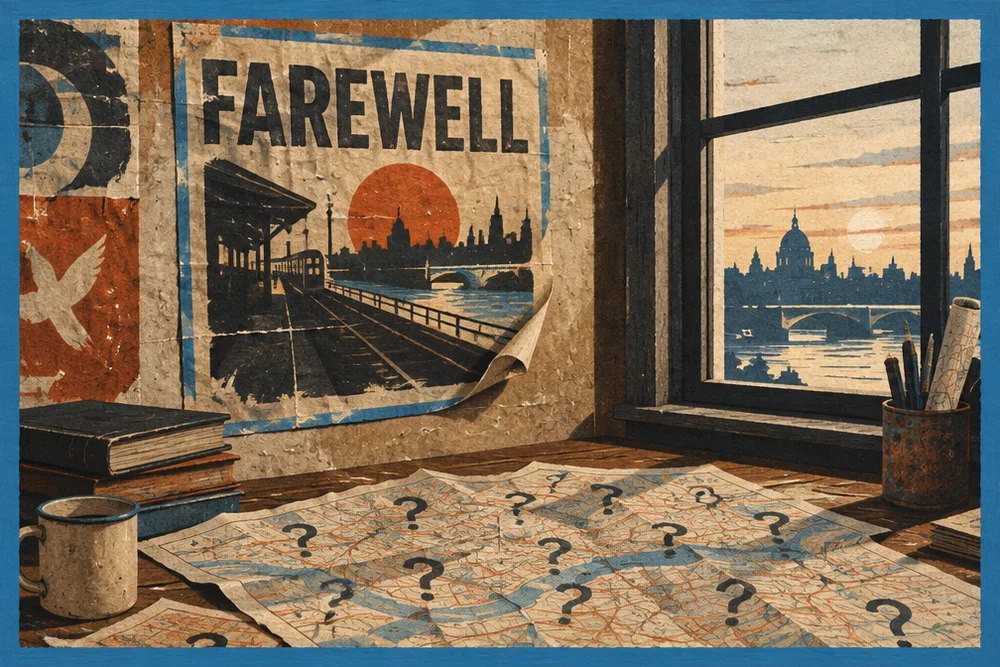
Across the room, the farewell poster had come loose at the bottom. Kit had printed it before the blackout, a plain block of type announcing Dusk Radio’s final broadcast. The corner lifted and settled with each draft from the old window. Zadie imagined the poster’s promise of a final night, a clean ending with a goodbye at its center. The town had turned that ending sideways.
“I thought I’d be talking about the station,” she said.
Kit glanced over. “You are. It’s where the calls are coming in.”
“That’s not what I meant.”
“I know.” Kit pressed the poster’s loose edge flat with one palm. “But the station doesn’t need to be the story just because it’s closing.”
For a moment Zadie heard the old argument with Ruth in her own head: that a story told clearly could make people understand; that keeping something private could leave the wrong version in place. She had brought the recording because she wanted the scholarship judges to hear her mother’s voice, the pauses and the strain, not just Zadie’s polished account. She had called that respect. Ruth had called it family.