The Last Shift at Dusk Radio
Page 5 of 181
Chapters
“Maybe people need to know when the signal goes dark, not why we think it matters.”
Zadie looked at the printed sentence. She couldn’t tell whether Kit’s objection was to the words themselves or to the way they made the station’s ending sound noble. She lifted the brush and covered the last dry corner of the poster.
Back upstairs, Perry had cleared the folding table except for the farewell script. It was three pages, printed in large type, with pauses marked by diagonal slashes. Zadie recognized her own edits: a lighter introduction, a shorter history of the station, a closing line about keeping the night company. The script looked confident because she had removed every sentence that sounded uncertain.
“That’s the polished version,” Perry said. “I printed it in case you want the comfort of paper.”
“You make it sound like a bad thing.”
“Paper?”
“Having a script.”
“A script is a tool. So is a window you can see through. Neither one decides what you’re saying.” He gathered two binders and set them by the stairs. “I’ll leave the station key on the desk when I go. You’ll have the room to yourself.”
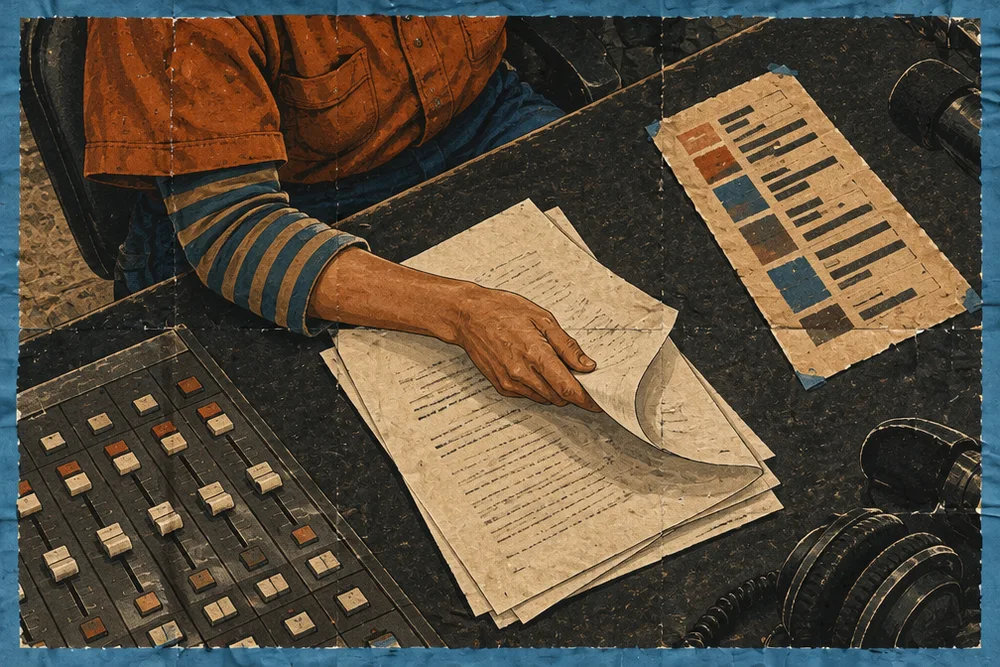
Zadie sat in front of the board. The seat was too low, so she stacked a phone book beneath her feet. On the wall, a clock ticked toward nine. The shift schedule said Perry would stay until handover, then leave her alone with the transmitter, the studio line, and the closing date.
“Will anyone be listening?” she asked.
Perry paused with a binder under his arm. “People listen when there’s something to listen to.”
It was the sort of answer adults gave when they wanted to sound encouraging and avoid promising anything. Zadie turned the pages of the script. “What if I make a mistake?”
“Then you correct it.”
He said it without drama. She liked that and disliked it at the same time. A mistake on air could be cut out of a polished portfolio. A correction would remain beside it.
Perry showed her the station’s old logging sheet, a ruled form where she had to write the time of each program segment, any technical issue, and the name of whoever was at the microphone. He explained the call-in delay and the red light that meant a line was live. He showed her how to fade a record without losing the opening note. He did not mention the scholarship once.
“There’s a first-aid kit in the office,” he said. “There are two exit routes. If you leave the building, take the key. And don’t let anyone downstairs talk you into giving away the microphone.”