The Last Bus Was Ours
Page 36 of 229
Chapters
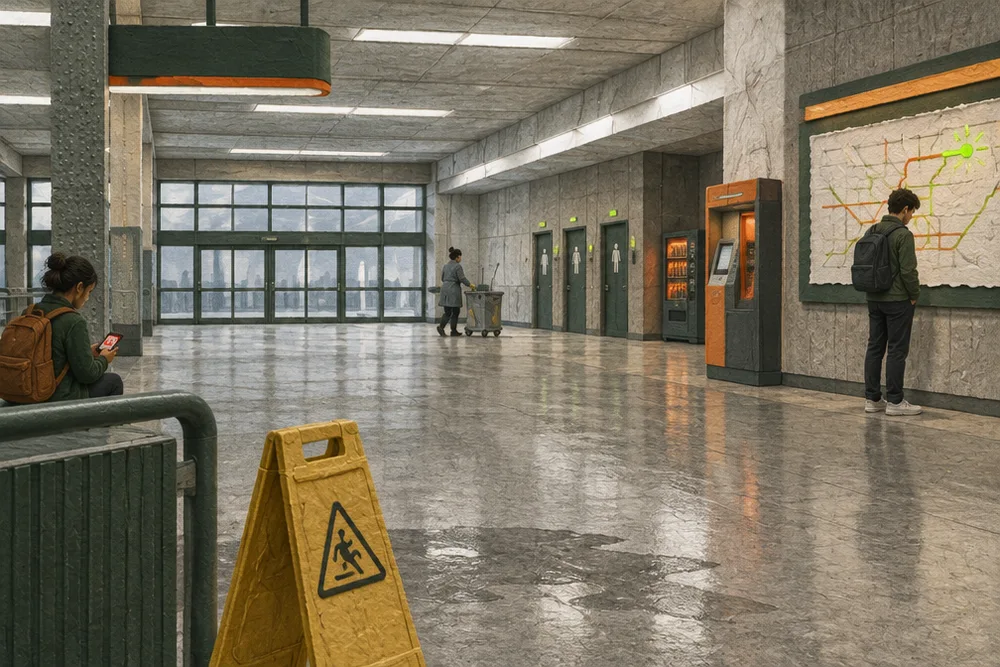
A cleaner pushed a gray cart across the far end of the hall. She lifted a floor sign over a damp patch, set it down, then turned the cart toward the public toilets. Somewhere behind the ticket kiosk, a vending machine thumped. Uma’s phone battery warning glowed red. She had spent the ride checking the time, though she had brought the charger to lend Orin. She could have asked for it back; she did not.
“What’s the shuttle time?” Orin asked.
“Twenty-fifty-six.” Uma pointed at the board. “The market shuttle unloads here twelve minutes after Route Six goes.”
“I know.” He looked at the service map, then the shut bay. “I’ve never stayed for it.”
That admission made the wait feel more useful and more irritating. He had helped write a recommendation about a place he had not watched at the moment its stranded passengers arrived. But he was watching now, and she could not decide whether that counted as enough.
The pause lengthened. Uma’s shoulders stiffened. She thought of the first lidded pot cooling in Spar Yard Studio, the lid she had shaped carefully enough that Nessa had promised not to touch it before the kiln opened. Tomorrow she wanted to hear whether it had survived. She wanted to reach home on time, too. The bus’s departure had made those wants seem incompatible. Tonight, at least, she had permission to stay and see what came next.
At 20:55 a cluster gathered near the market shuttle sign. A woman in a striped scarf checked the public board twice. Two men in matching market aprons stood shoulder to shoulder, talking about a delivery invoice. A teenager carried a crate of wilted greens against his hip. None of them looked like the four boarders Orin had counted.
The shuttle arrived with a hiss of brakes. Its doors opened, and passengers stepped into the terminal in a loose wave. A woman with a folded umbrella came first, then a pair of older men, then a stream of people carrying tote bags and work satchels. The market workers came last, shoulders slumped, apron ties still knotted. In seconds, the hall filled with voices and the scrape of shoes.
Uma rose from the rail. “Now.”
Orin turned a fresh page in his notebook. “How many?”
“Wait.” She pointed to the bay. “Don’t count the room. Count what happens.”