The Last Bus Was Ours
Page 188 of 229
Chapters
Veda summarized the protections: the dawn crossing remained as scheduled; the 21:09 bus would run on six Thursdays; ordinary fares applied; boarding was open to anyone; the pilot ended after its sixth trip. The panel would receive counts and rider reports before considering renewal. The driver assignment and depot coverage were documented, with the final roster change due before noon Friday.
“This is conditional,” a panel member said. “We are not committing the panel to fund a permanent run.”
“Correct,” Veda said. “We are authorizing a limited pilot using the cooperative’s offer, with the existing morning service explicitly outside the amendment.”
The word outside landed harder than Orin expected. The dawn run was not a funding source or a line to be borrowed against. It belonged in the record as service that remained. He turned the folded schedule over, then back again, to the side where he had circled 05:12.
The panel chair called the amendment for discussion. Questions came in a sequence of practical uncertainties: whether the bus would accept regular fares, whether cooperative employees had reserved places, whether six trips meant six calendar weeks or six Thursdays actually operated.
“Standard fare,” Veda answered. “No reservations. Six operated Thursday trips. If a trip is canceled, the panel will receive the reason and the pilot period will be extended only by further authorization.”
“Why not guarantee seats to the cooperative’s workers?” someone asked. “They are paying.”
Orin kept his hands flat on his knees. The cooperative had asked for an open service, but he had learned not to make assumptions on its behalf. Veda looked toward the clerk, who read from the signed offer: the contribution purchased public transportation, not private capacity. Orin felt the tension leave his jaw by a fraction.
Cal spoke when the panel asked about operations. “The driver and coverage are real. The schedule fits the depot. I would not sign it if it depended on a late closeout or unpaid minutes.” His hand stayed on the seatback as he stood. “But if you change the departure, you need to bring it back to us. Don’t adjust it in the print shop and expect the roster to follow.”
“Understood,” Veda said.
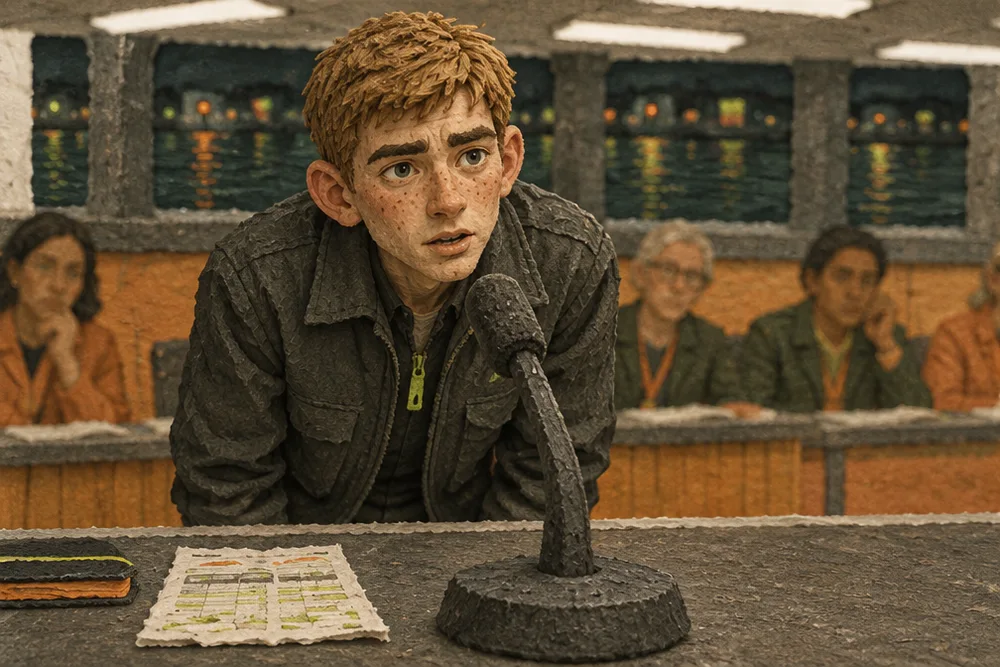
A member asked Orin whether the boarding counts would show demand fairly. He rose and folded at the waist toward the microphone, the way he did when he wanted to be heard without taking up more room than necessary. “They’ll show boardings on the trips that operate. We’ll also collect reports from people who couldn’t use them, and from people affected by the schedule. The numbers won’t stand in for those accounts.”