The Last Bus Was Ours
Page 167 of 229
Chapters
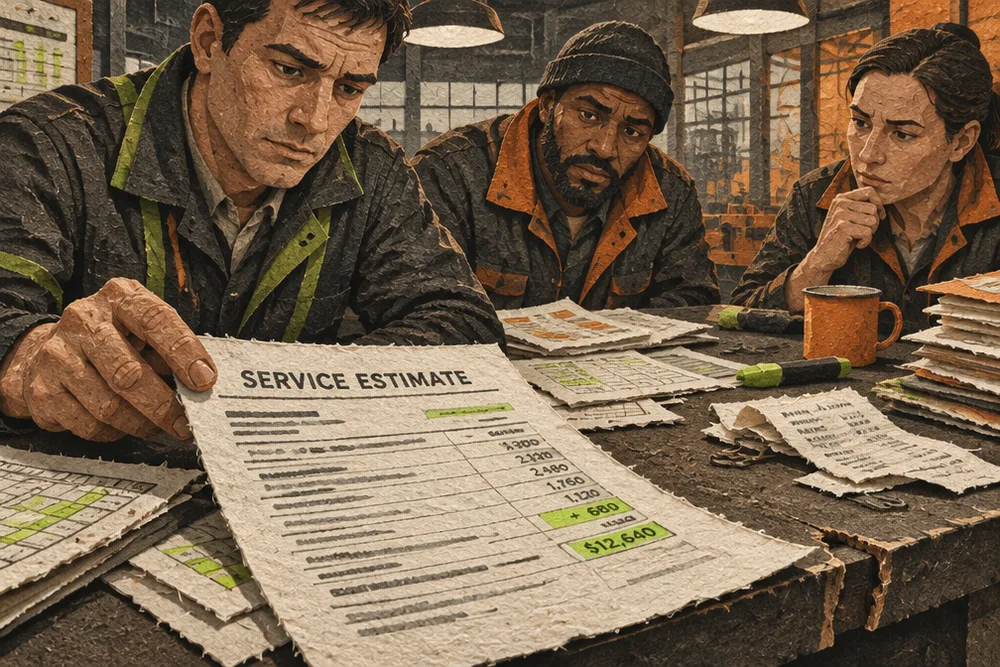
Arel brought her coworkers’ ride figures. Seli had gathered a second receipt and a written note from a worker who had switched out of two Thursday closes. Lew brought the market schedule, with the closing hours marked in orange pencil. They corrected Orin’s draft before discussing any price.
“This says people have been paying for private rides instead of taking the bus,” Arel said. “That’s not all of them. Some people are walking to the far lot and waiting on whoever has room.”
Orin drew a line through instead of and wrote alongside or replacing. “That’s more accurate.”
“Also, don’t count one ride as four separate trips if the four people all get out at the same place,” Lew said.
“For the cost to workers, we can show four contributions,” Seli replied. “For the number of cars, it’s one.”
They settled the difference by keeping both measures, with labels. Orin watched Arel trace a fingertip down the page, stopping wherever he had compressed several people into one category. It was slow work. The room’s clock clicked loudly, and below them the freight lift groaned up and down with loads no one in the meeting could see.
A cooperative administrator named Marn called them in after reviewing the draft. She was not hostile; that almost made Orin more cautious. She asked for the bus’s capped cost, how many Thursdays the proposal covered, and whether market members would pay for a service used by people who did not work at the market.
“It would be public boarding,” Orin said. “Standard fares. Anyone at the stop could ride.”
“Then our members aren’t buying a private shuttle.”
“No,” Arel said. “That’s the point. You’d be buying a limited public service instead of reimbursing rides that some workers can’t get into.”
Marn looked at the receipts, then at the schedule. “The comparison is useful. It isn’t an authorization to spend.”
“We know,” Orin said. “We want to know whether the members will vote on it.”
“They can vote on a capped invoice at the next meeting. I can’t promise the outcome.”
Arel folded her arms. “Don’t call it a pledge, then.”
“I won’t,” Marn said. She wrote the meeting date on a card and handed it over. “A vote. If the price arrives in time.”
The price came from Cal the following afternoon. Orin met him at the depot, where the floor smelled of wet rubber and the night’s cleaning water. Cal had already spoken with the roster office. He set down a printed service estimate and kept one hand on the page as if it might try to slide away.