The Kite That Carried the Border
Page 78 of 224
Chapters
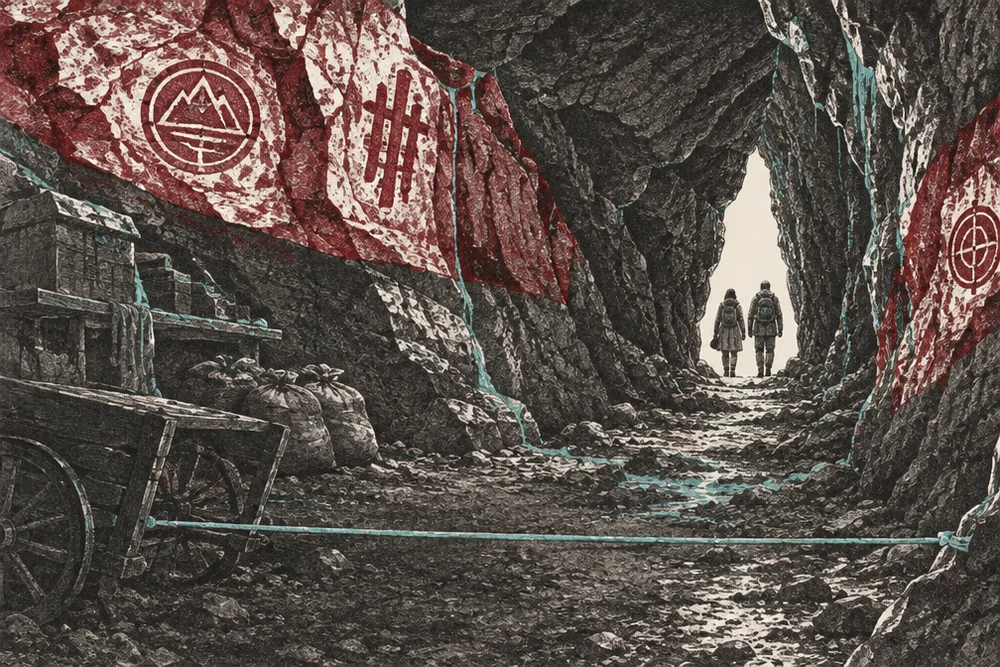
He looked at the neat cord stretched across the floor. It made the cave seem divided into a Rusk half and a camp half, even though the barrow, the sacks and the shelf all crossed it in different ways. The line looked like an answer because it was straight.
He gathered the lease strip carefully, smoothing the fold along its existing crease. “I’ll postpone filing.”
Tess’s eyebrows lifted. “You don’t have to decide today.”
“I have decided not to file today.” He put the strip away. “That is not the same thing.”
“No,” she said. “It isn’t.”
They packed the measuring cord, but Tess left the flags where they stood. Iven checked the household stamp one last time before covering it with the shelf board again. The mark remained visible through the gap, a small wheel pressed into clay, still his family’s sign and no longer a complete description of the space around it.
At the entrance, he paused beneath the low ceiling. “How long before the rain reaches the lower route?”
“I don’t know,” Tess said. “The upper notch hasn’t been measured.”
“You’re meant to be mapping the store.”
“I am.” She slung the level over her shoulder. “That doesn’t mean I know what the water will do.”
There was no embarrassment in her answer, only the boundary of what she could attest. Iven had been taught that a surveyor’s certainty was part of the instrument. A line properly measured could be trusted. But a line could be accurate and still make a false promise about the world around it.
“You think the camp should keep the bay,” he said.
“I think the bay has to work for the people who are supposed to use it.”
“That isn’t the same answer.”
“No.” She stepped toward the passage. “It isn’t.”
Iven followed her into the narrowing route. The Rusk entrance waited beyond, pale light touching the clay walls. In his vest, the lease strip pressed against his ribs. He still had grounds to reclaim the grain bay. He had not given up his household’s due, and he would not let anyone turn a delay into consent.
But the claim could no longer be filed as though a line on paper would clear the floor. Before he carried it uphill, he wanted to know whether the space could be divided in a way that left both the grain and the passage usable. The answer might cost his family room. It might cost the camp more. He did not yet know who would be asked to give up reserved space.
“We measure again,” he said.
Tess glanced back. “From both entrances.”
“From both.”