The Kite That Carried the Border
Page 211 of 224
Chapters
Bram had gone back to the board. He picked up his pencil, then rested it across the two slots. There was nothing new to enter yet. Iven stepped back beside the sacks to see what he had to work with.
The sacks had been separated by mark before they were lowered. Two belonged to the camp’s first allocation; three carried the Rusk household stamp. Iven crouched and turned the nearest sack so the clay mark faced out. His family’s stock was meant to be hauled in smaller loads while the trial was in force. The agreement gave them no exclusive bay, but it did not erase their claim to the grain they had stored.
“Put the household three aside,” Sella said. “Then the camp’s part can go in.”
“If we set aside my three, they will take the whole basket next trip,” Iven said. He looked at the narrow route, measured not by the width of the law but by the actual turn in the limestone. “We can put two in the bay now and leave one on the basket for the return.”
Sella folded her arms. “That’s your stock.”
“And this is the first delivery. I said I would take smaller loads.”
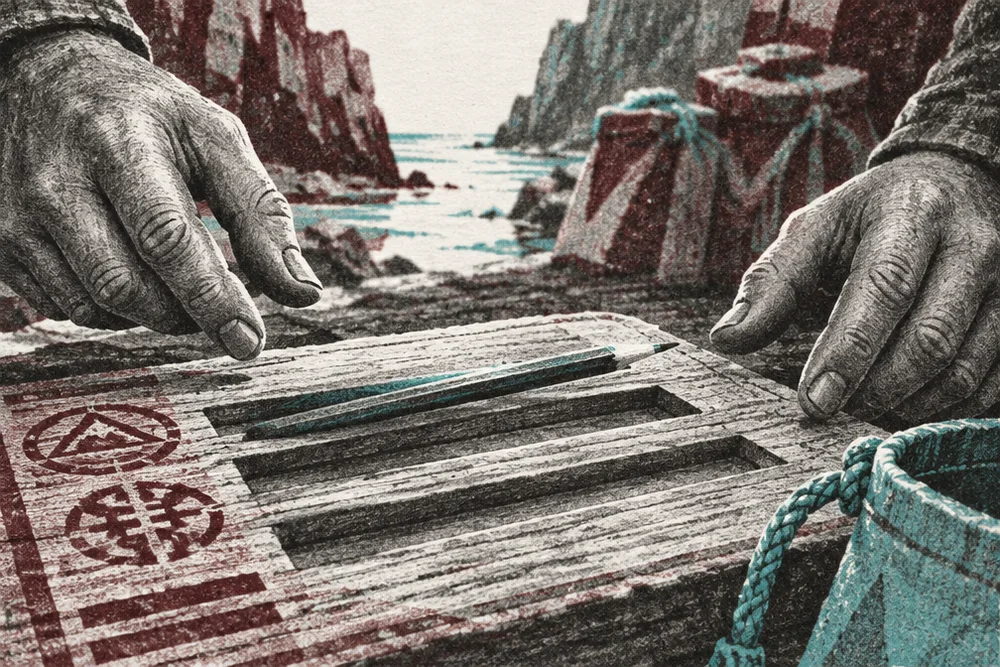
He did not offer his household’s grain as a gift, nor claim the right to rearrange the camp’s share. He separated the loads according to the tally, then set his family’s sacks near the turning recess. One of them would travel back with the empty basket. When the deferred Keld sacks came down, that return space could carry them up to the bay rather than sending the basket back empty.
Bram touched the cord on his pouch. “If you put one back, the receipt still says three received.”
“Then we amend the receiving entry, not the delivery record. Three of my household’s sacks have arrived. Two go in now; one is on the return basket. It remains received here, in view, not stored.”
Bram considered that, then nodded. “I’ll write where it is.”
Iven felt the old argument gather in him: that a named share should be kept safe from any use not written into its lease. It was not a foolish argument. His family had clayworked for generations and had paid for their reserved space. But a reserved bay without an approach, a load too large for the turning passage, and a corridor blocked by the very stock it was meant to serve—those rights were becoming a claim to an unusable line on paper. He had learned that at Cold Mouth. He had not learned to stop caring about the line.