The Kite That Carried the Border
Page 175 of 224
Chapters
Tess slid the two books apart, making their columns visible. “The entries show contributions from both valleys. They don’t show the same sacks counted twice. The old receipt says both valleys paid for separate freight lowers. The camp was fed from the shares you sent. What was concealed was who lived here, and the condition of the border—not that one valley’s flour was secretly taken as the other’s.”
“That distinction won’t fill a store,” said the orchard keeper.
“No,” Sella said. “But it tells you what you are deciding to supply.”
Bram crouched beside the tally, eyes on its paired columns. He spoke without looking up. “And if you put the sleeping names in the valley account as freight again, we will know before the next load.”
A few people turned toward him. He flushed, then held his ground, toes gripping the stone.
Tess saw the consequence of making the account public: it did not make the camp safe by itself. It made the next decision visible, and gave the people who bore it a way to answer.
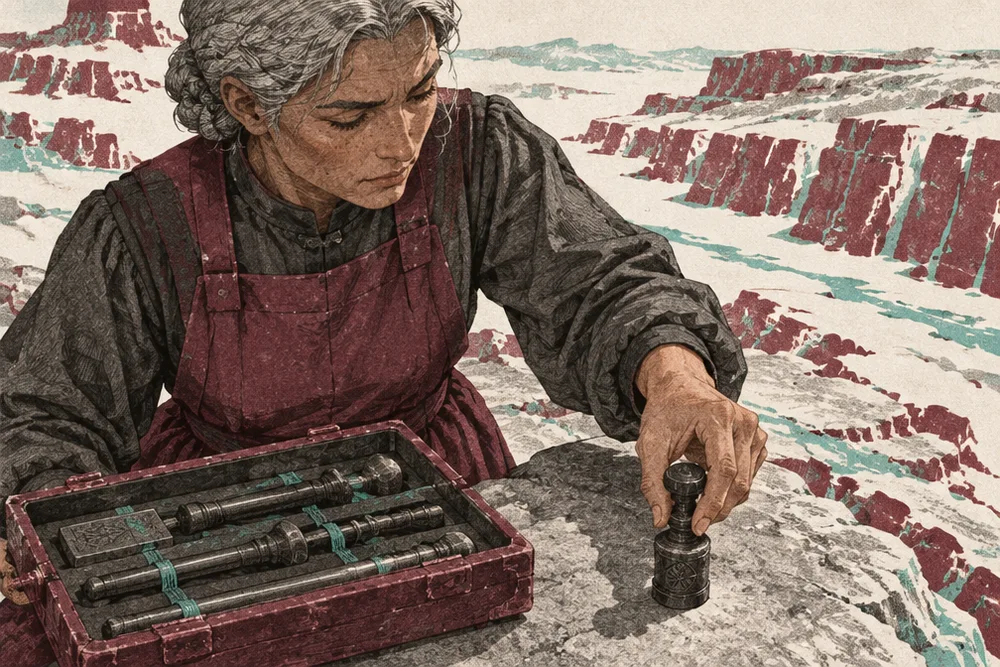
Orra opened the seal case. Inside, the instruments lay in fitted slots, each darkened by years of hands. She lifted the joint clerk’s seal, turned it once, and set it down on the stone beside the case.
“I cannot certify my own correction,” she said. “Nor should one clerk hold both valleys’ authority in one box.”
The Keld keeper’s mouth tightened. “You have been the joint clerk through every winter delivery.”
“And I will remain able to explain the records. I will not be the person who makes the correction binding.” Orra pushed the case toward the center of the slab. “Choose separate custodians. One from Keld, one from Rusk. Each holds only their own seal. They can compare impressions in public.”
The Rusk delegate who had asked about title looked toward his companions. They spoke in low voices, keeping their backs to the drop. On the other ledge, the orchard keeper asked two households whether either would serve. The questions were practical and exact: Could the custodian reach the bench at a short call? Would the household store the seal separately from its own lease marks? Who would hold it if that custodian fell ill?
No one rushed to volunteer. Tess could feel the meeting pulling toward the old habit: make the clerk responsible, so the rest could treat the result as someone else’s act.