The Hour We Kept Dry
Page 85 of 278
Chapters
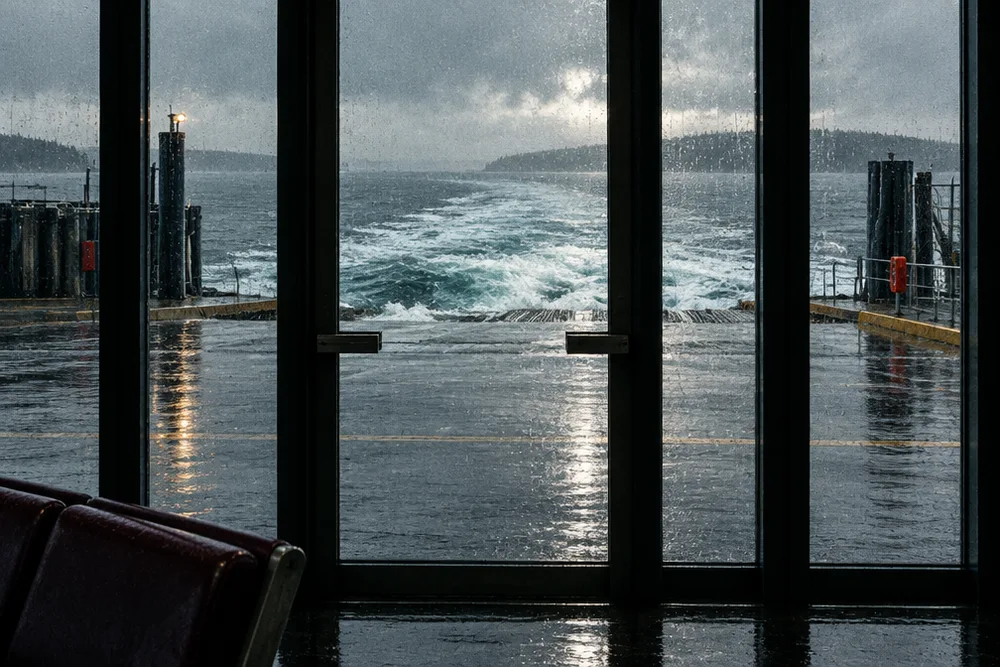
The ferry’s wake rolled under the apron. Its boards shifted gently, the kind of motion that passed through the knees before the eyes noticed. Ivo set his cane flat beside him and worked his fingers open. His joints hurt in the damp. He remembered the walk-up stairs above Thimble Stair, the third landing where he rested, the sixth-floor door that opened onto the diagonal seam. He remembered rain on the floor and the furniture raised on blocks.
“I can’t keep the apartment the way it is,” he said.
“I know.”
“The damage won’t wait for the records to catch up.”
“No.”
“And the hour might not return to that room.”
“No.”
He looked at the rain falling beyond the roof. “I don’t know what I want the hour to do yet.”
“You don’t have to know today.”
“Good. But I want to see the flat.”
“I’ll arrange it,” Serit said.
“You’ll ask them when I can see it.”
“I’ll ask them when you can see it.”
“And I’ll decide what questions to ask.”
“Of course.”
He studied her face for the hidden correction, the part where she would say they would go at a convenient hour or that the seller was already expecting them. She only nodded. That was not agreement to anything beyond the visit. It was enough for the moment.
Ivo lifted the accordion case. The handle pulled at his fingers, so he changed hands before they went back through the hall. A ferry discharged passengers in a rush of damp coats and bags. They waited at the edge of the flow rather than push through it. Serit stood beside him, watching the ramp, not steering his shoulder.
When the stream thinned, they crossed to the covered passage. The hall swallowed the rain sound, and the bustle swallowed the small clicks of the case against his cane. He could still feel the outdoor air on his face, the open apron’s space in his chest. There had been no dry hour there, but the place had not asked him to pretend the weather was elsewhere.
At the next route board, Serit stopped to check the connection. Ivo rested his case against the wall and looked back through the glass doors. The apron was visible in fragments between passing bodies: wet boards, a public bench, the broad lane to the ferry. A child in a mint slicker darted across the view, orange satchel bouncing, and vanished into the waiting crowd.
“That child’s in a hurry,” he said.
“Most people are here.”