The Hour We Kept Dry
Page 53 of 278
Chapters
“The boards won’t stop the rain.”
“They’ll keep the table from sinking.”
He studied her face. She was tired, and the rain had darkened the coil of hair at her temples. “Bring them tomorrow, then. But don’t bring a buyer.”
“I won’t.”
She turned to go. At the top of the stairs she looked back, waiting for him to tell her whether she should stay. He could have asked her to sit. He could have asked her to leave. Instead he said, “I’ll be here.”
Serit nodded and descended. The landing remained dry after she was gone. In the room, the rain continued to tap at the closed windows.
Ivo did not sleep that night. He shifted the chair away from the wet stripe and wedged a folded towel beneath the door. The water found its way around it. He went through the maintenance box again, this time searching for more than the one copy. The cracked whistle rolled against a tin of screws. The receipts had blurred into brown patches. Beneath them lay a narrow carbon sheet with the city’s old seal.
He could make out only pieces: temporary occupation, Thursday allotment, resident cooperation. A line in the margin named the playground crew. Another listed his flat number. He sat with the paper on his knee, wondering when he had signed. He remembered a city officer in a yellow coat asking him to make room for the children. He remembered saying yes. He did not remember a form.
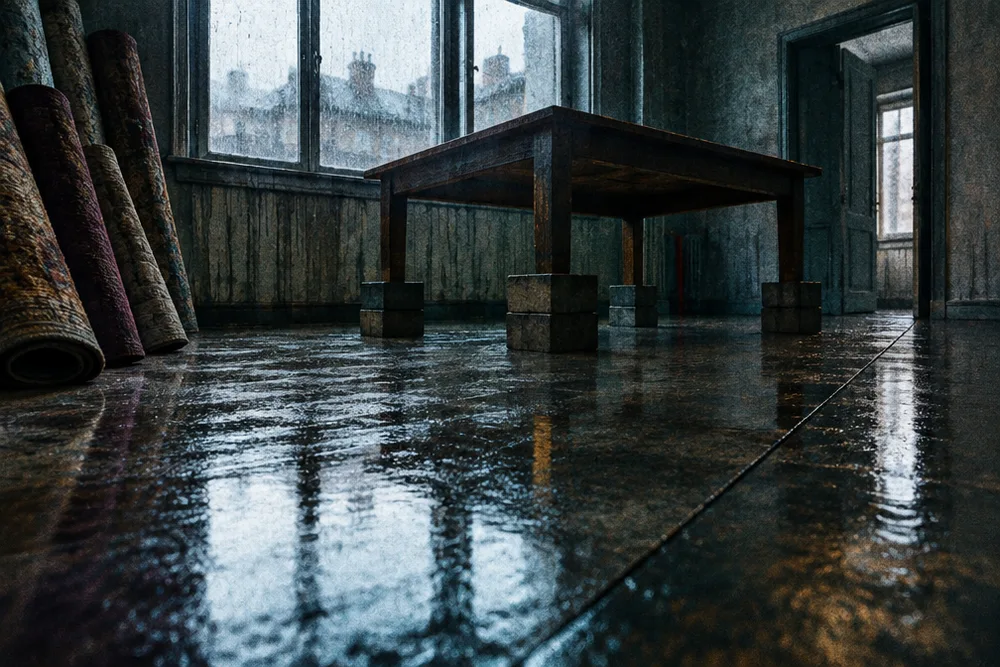
The next morning, Serit returned with narrow boards and a hammer. She worked beside him, bracing each board beneath the table legs. He showed her where to set the blocks so they would not slide when the deck shifted. The work put them shoulder to shoulder without requiring either of them to look at the other.
“The clerk says a residence election can make the hour permanent,” Serit said as she tapped a wedge into place.
“She said it could.”
“It would stop the rain coming in.”
“It would stop the claim going anywhere else.”
Serit kept her eyes on the wedge. “I know.”
He had heard the strain in her voice. She had spent years treating every problem as something that could be secured, carried, or paid off. The sale was meant to solve the stairs, the repairs, and the long walk to the ferry in one clean movement. Now the hour they had guarded as a family custom had a public owner too.
“Did the children come every Thursday?” she asked.