The Hour We Kept Dry
Page 187 of 278
Chapters
Serit rolled the revised plan, leaving the new no-ticket clause visible at the top. The agreement was signed, but the people it meant to serve had not yet agreed.
At the slip, they measured the route one more time. Serit walked it as a passenger would: from the ferry ramp, past the queue’s turn, into the open apron. The tape’s numbers trembled in the wind. Bess paced the proposed table positions, carrying a folded sample table under one arm.
“Here’s where a stroller turns,” Serit said. She set her feet at the ramp bend. “And someone coming off the boat with a rolling case needs the same width.”
“That’s why the table goes against the wall.” Bess opened it, then folded it shut again. “No legs in the lane. No toys scattered across the turn.”
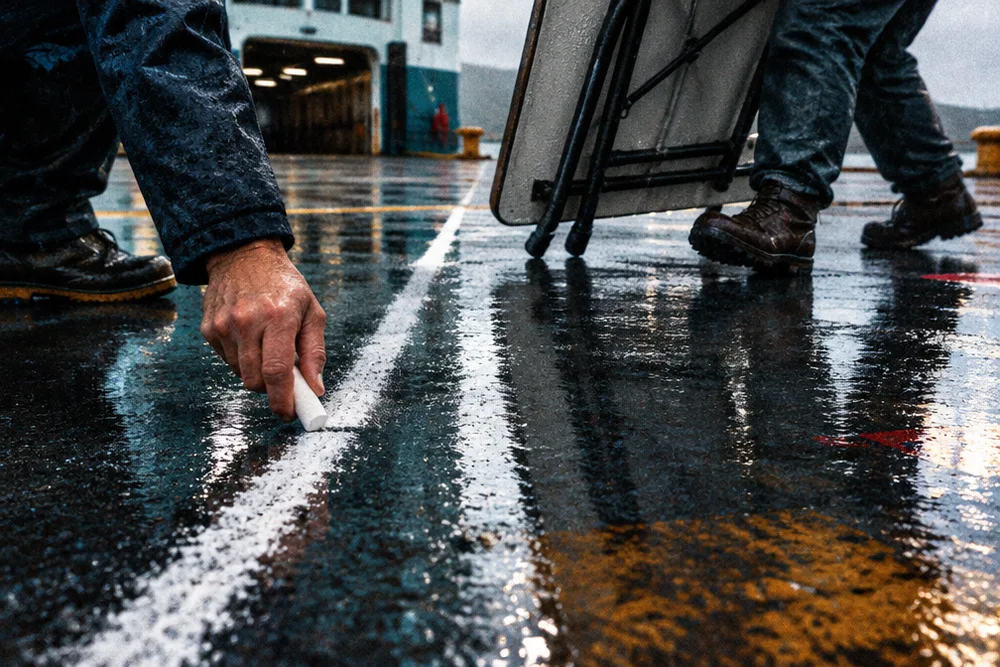
Serit measured the lane and marked its edge in chalk. The boundary could be surveyed later, but the access rule needed a shape that staff could recognize without pulling out a document. The clear strip ran from the ramp to the waiting hall, broad enough for two people to pass without one stepping into the game area.
A pair of passengers came through, one steering a cart piled with bundles. Serit stepped aside. Bess shifted the sample table farther back. The cart passed cleanly.
“That’s the test,” Bess said. “Not an empty deck and a pretty plan. People with wet bags and nowhere to put their feet.”
Serit wiped chalk from her brass cuff clip. “The apron stays open even if the session’s cancelled.”
“I agreed to that.”
“And if the steward has to leave early?”
“Equipment gets put away or left against the wall. The space stays accessible.” Bess looked toward the Yard. “I can’t promise we’ll never have a staffing shortage. I can promise the hour won’t be withheld because we do.”
The distinction mattered. The agreement did not conjure extra workers, and it did not guarantee a game table every Thursday. It did prevent the weather allotment from becoming a locked room in the open air. Serit wrote the clause again in her notebook, word for word, so she could catch any alteration when the council copied the terms.
The ferry canopy boomed softly overhead. Beyond it, the deck rose and fell with the load of an arriving boat. The chalk lane held its line across the moving surface.
A ferry arrived early, bringing a spill of passengers who slowed at the apron’s chalk marks. Serit stepped back to let them pass. A boy with a dripping hood followed a woman carrying two market baskets; he looked at the empty space where the plan placed the games.