The Hour We Kept Dry
Page 183 of 278
Chapters
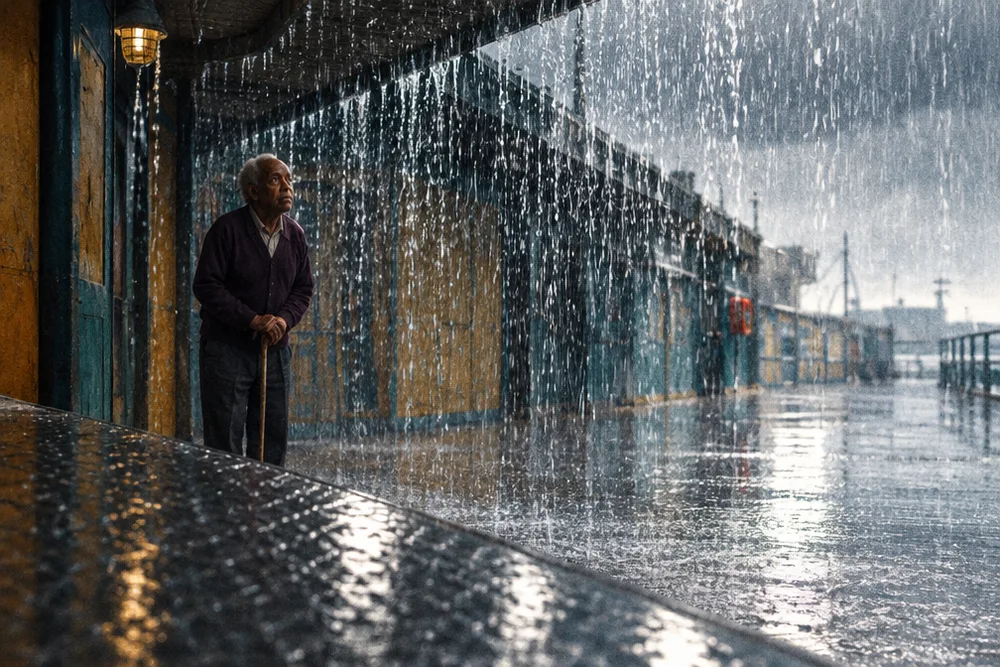
The next morning he rode the lift down and crossed the hall to the apron. Rain made the open deck shine, and the canopy dripped steadily along its edge. The dry landing at Thimble Stair had been a thin, inexplicable line. Here the water fell everywhere, on the benches, on the boarding lane, on the place where a child might set down a bag while waiting.
He stood beneath the canopy and pictured what a dry hour could make possible. A table where wet pieces could be played without water blurring them. A clear path to the ramp. A seat for someone who wanted to rest without joining a game. No one would need to be invited into his home. No one would have to climb six flights. But the apron belonged to the ferry as well as the yard, and its hinge might break the boundary the council could certify.
A steward opened the hall doors. Passengers began to gather, holding umbrellas closed beneath the roof. Ivo moved aside, using the cane to keep himself clear of the main flow. A boy in a red cap ran past him, then came back when an adult called his name. The boy’s shoes squeaked on the wet deck.
Ivo thought of the old children waiting in his flat, of their coats folded on chairs and their hands busy with blocks. He thought of the children who now came to Net Yard and found no sheltered place to play in open air. The hour had never been his music alone, though the music had become his reason to keep it.
He returned to his room before the next ferry unloaded. He would need to bring the maintenance copy to the hearing. He would need to hear what the council could and could not certify. And he would need to decide whether the public place he imagined could be made real without closing the way people boarded.
In the meantime, the floor repair had no date. The flat stayed wet. The lift room cost by the month. Serit’s deposit was gone, and the sale remained uncertain. Ivo put these facts in order in his mind, one after another, without trying to make them cancel each other out.
Then he picked up the accordion. He opened the bellows a hand’s width, tested the reed with a quiet breath, and closed them again. The room held the sound. It did not become the old hour. It did not need to. For now, he could play because he chose to, and let the rain continue outside.