The Hour We Kept Dry
Page 161 of 278
Chapters
“If the apron is to be a public annex,” she said, “the plan has to work when the steward is busy.”
Bess folded her arms. “That’s the first thing you’ve said today I can sign my name under.”
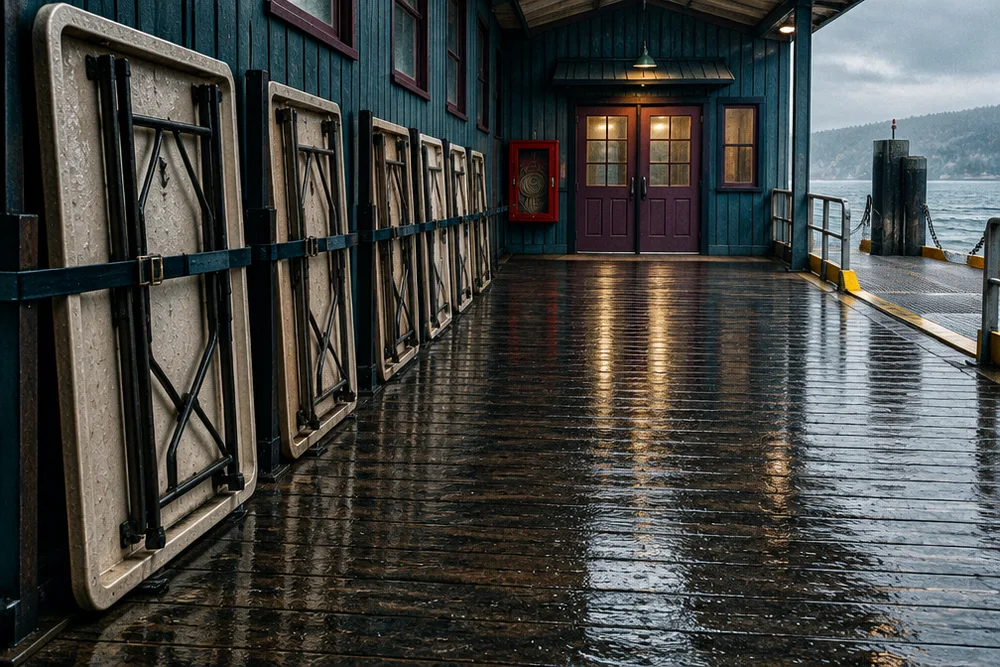
They cleared the apron for a third run. Bess folded the tables and carried them, one at a time, to the strip beside the wall. The bench stayed sideways, its seat facing the hall. The folded tables rested upright against it, their legs latched, taking up less space than Serit expected.
“If they go here,” Bess said, “the hose cabinet stays clear. But they’ll need a strap or they’ll slide when the deck moves.”
“Can the bench hold them?”
“Not if it’s being used.”
They tried a rope. Bess had brought one from the Net Yard equipment locker, and Serit tied it through the table handles to a wall eyelet. The violet survey ribbon was not with them; this was not a measurement, and Nemi had not asked them to mark the apron. Still, Serit caught herself looking for a line that would turn the practical arrangement into a rule everyone could see.
“We can mark the lane on the deck,” she said.
“With what?” Bess asked. “Paint wears off. Tape peels when the rain gets under it.”
“A raised strip would catch a wheel.”
“Exactly.”
Serit exhaled through her nose. “Then the lane stays clear because the furniture stays put.”
“And because people know it’s a lane.”
“We can post the diagram.”
“A diagram can’t move a bench.”
“No,” Serit said. “But it can tell the next person why the bench is there.”
Bess regarded her for a moment, then nodded once. It was not agreement to the plan as a whole. It was agreement that the question deserved more than a shrug.
They opened the tables again, this time with their long edges against the wall and their short ends facing the open apron. A child could sit at them without blocking the route from ramp to hall. The bench formed a quiet waiting place beyond the lane. When the tables folded, that whole side of the apron became open floor.
Serit walked the route with an empty hand trolley. It passed cleanly. Then she added a suitcase, angled the trolley as a passenger would, and made the turn. The wheels did not catch. The bench did not crowd the ramp. The tables did not intrude into the boarding path.
“That’s better,” she said.
Bess checked the table latches. “Better isn’t the same as finished.”
“No. But it’s something we can take to the hearing.”