The Hour We Kept Dry
Page 157 of 278
Chapters
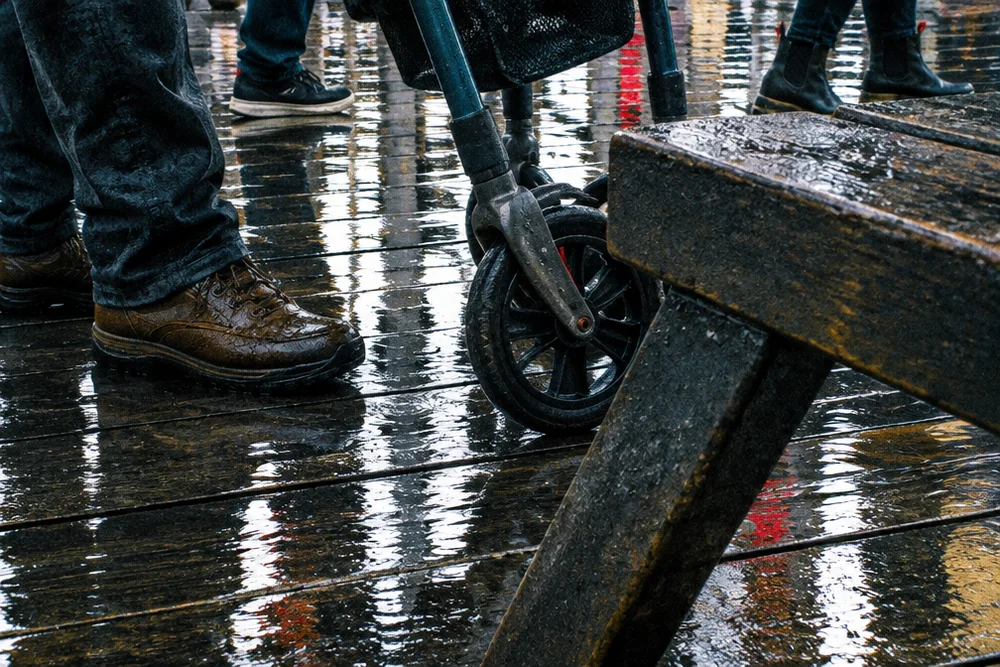
“Keep moving, please,” Hal called, gentle but firm. “There’s room beyond the turn.”
A parent came down behind them with a child on one hip and a tote bag dragging at the ground. Then a man in a rain cape, then two yard families, then a woman with a walker whose rubber feet ticked over the seam in the decking. Each person altered the shape of the line. The passage did not stay a straight lane. It swelled around delays and narrowed when someone paused to find a ticket.
Serit stood at the ramp turn with her hands open, directing without touching. Her body knew how to read a crowd’s pressure: where people would step, which shoulder would turn, how long a gap lasted before it closed. She watched the walker approach the bench’s near end.
The woman stopped. The walker’s front wheels had space to turn, but the rear legs caught the bench corner. She backed up, tried again, and the queue bunched behind her.
“Hold there,” Serit said. She raised a hand to the passengers, not the woman. “We’ll clear it.”
Bess came around the bench. “It’s only the corner.”
“It’s the corner every time someone has to make that turn.” Serit crouched, measuring the gap with her eyes. “The walker can’t swing wide without running into the queue. If they stop here, everyone behind them stops too.”
The woman had already pulled the walker back and was waiting for the line to loosen. Her face held no accusation. That made Serit feel the failure more plainly. There had been no dramatic mishap, only a person made to attempt the same turn twice.
The boat was not even half unloaded before the test had found its answer. Serit waved the next passengers through the waiting hall, then asked the walker user if she would try once more after the space was changed.
“If you’re going to make me do it for science,” the woman said, “at least move the thing first.”
“We will,” Serit said. “You don’t have to try again.”
The woman nodded, accepting the distinction. She continued along the ramp with the walker held close to her body. Serit watched the wheels clear the seam and disappear beneath the canopy.
Bess stood with one hand on the bench. Her chipped central incisor showed as she pressed her mouth into a line. “I’ve had that bench there for years. No one has complained.”
“That doesn’t tell us nobody has had to turn around.”
“I know what you mean.” Bess glanced at the slow, compressed queue. “I also know what happens if we take out every place to sit. People wait standing because there’s nowhere else.”