The Credits After the Chime
Page 24 of 253
Chapters
“I heard it. I was speaking over it.” June turned one of the headphone cups away from her ear. “Do you want to start again?”
Tessa looked at the stopped counter. “We can. I’ll save this one and make another.”
“Where is this one saved?”
“In the new folder.” Tessa opened the file menu, trying to remember what she had clicked. The dialog box showed a path with the station’s name, then a folder called TEMP. A file called Take_1 sat inside. “Here.”
“Can you play it?”
“Yes.” Tessa pressed the space bar. They heard the beginning, then the low mechanical rumble. June’s voice was clear but the air handler rose beneath her. At the end came the chair bump, a small thud in the headphones. Tessa stopped playback.
“It’s not unusable,” June said. “But it’s not quiet.”
“We can record it again.”
“I only have until the bus.”
“I know.”
The words came out too quickly. Tessa felt a small hot spot beneath her collar. She wanted to offer to fix it, to make a cleaner take out of the one they had. Instead she watched the still-open file menu and tried to understand where the recording had gone.
The air handler stopped. The sudden quiet made Tessa notice the booth clock ticking. June pulled her timetable toward her and tapped the pencil marks along the route. “We can do one more,” she said. “But don’t stop it unless I ask.”
“Okay.”
“And don’t ask me questions in the middle of an answer.”
“Okay.”
“If you hear a problem, write it down and tell me when we’re finished.”
“Got it.”
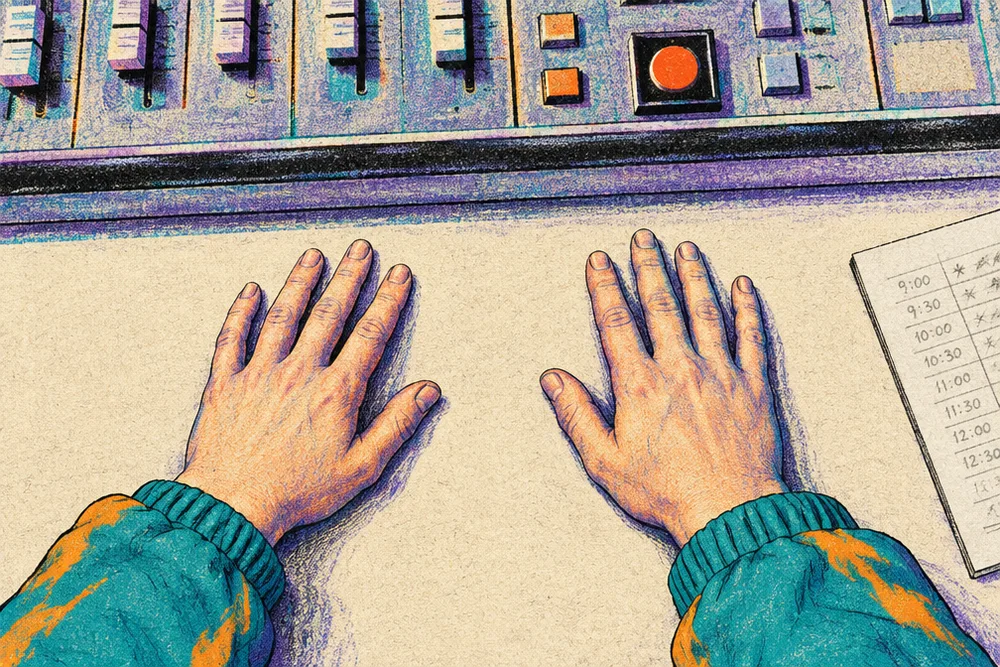
June leaned toward the microphone. Her shoulders eased. Tessa checked the red record button, checked the counter, and made herself keep her hands flat on the desk. June began again, this time more slowly. She talked about the clinic awning, the crowded bus after the shift, the grocery lot where the driver waited for people crossing from the far curb. Tessa let her finish each thought before moving to the next question.
The take gathered momentum. June spoke without looking at her notes. She described how the bus route bent around the lower edge of town, how the stop signs rattled when a truck went past, how students sometimes stayed on for one extra loop because the ride was warmer than waiting outside for a ride home. Tessa followed the pencil marks on the timetable and asked about the stops June had circled. The interview had a rhythm now, less like a school assignment and more like a person showing someone else the shape of a familiar place.