The Gauge That Measured Nothing
Page 161 of 164
Chapters
Nell followed. The sun had warmed the concrete, and the mainland air smelled faintly of wet stone and bus exhaust. Behind her, the ferry settled at the berth as passengers came ashore.
They walked toward the bus stop at the pace Tomas chose. The quay’s path climbed gently beside a brick warehouse, and a row of painted bollards marked the edge of the loading zone. Nell kept her attention on the way ahead, not on the uneven rhythm of his steps. He leaned more heavily on the cane when the pavement tilted. At the top of the rise he paused beside a map board.
“You want to sit?” she asked.
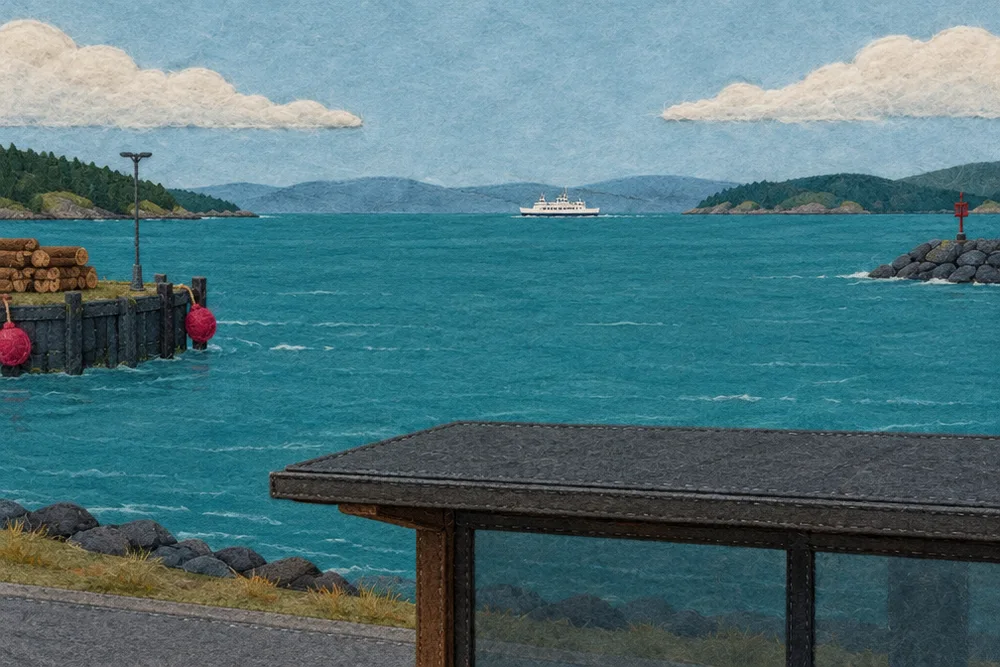
“In a minute.” He looked back toward the water. From here they could see the ferry’s upper windows and part of the temporary pier on the far shore. The boat would return to the fishing side, take on the next limited group, then cross again. It was not a grand schedule. It was a service people could use, which was more than the town had had last week.
Nell pulled the ticket stub from her pocket. The punched circle had left a clean hole beside the printed time. She had spent money she meant to spend on boots, and the absence of it still pressed on her. But it did not feel like a mistake. The money had bought a seat for Tomas, not permission for him to ride. He had supplied the decision himself.
“The old landing will take a while,” Tomas said.
“They said it needs a new connection.”
“And the live check.”
“Yes. They put it on the repair order.”
He nodded. There would be more forms, more people standing by the joint while the ferry pulled away, more recordkeeping that asked what moved and when. Idris had sent Ruth the chronology. Ruth had watched the needle kick with her own eyes. The gauge that people had called useless had done exactly what it was built to do; the failure had been in the question they thought they were asking it. Now it had a place in the work again.
Tomas touched the map board with the end of his cane. “That bus goes to the station?”
“The one we want does. It’s coming in six minutes.”
“Let’s sit, then.”
There was a bench beside the stop, its metal slats cool in the shade. Nell sat at one end and Tomas at the other, leaving room between them for his cane. He rested his palm on the handle and watched the ferry across the water. She did not tell him what she thought the crossing meant. He had been there for it. She could let the meaning stay unfinished for a while, like the route itself.