The Fourth Tick Went Missing
Page 205 of 270
Chapters
“Good.”
“And you?”
“I go back to the bowl.”
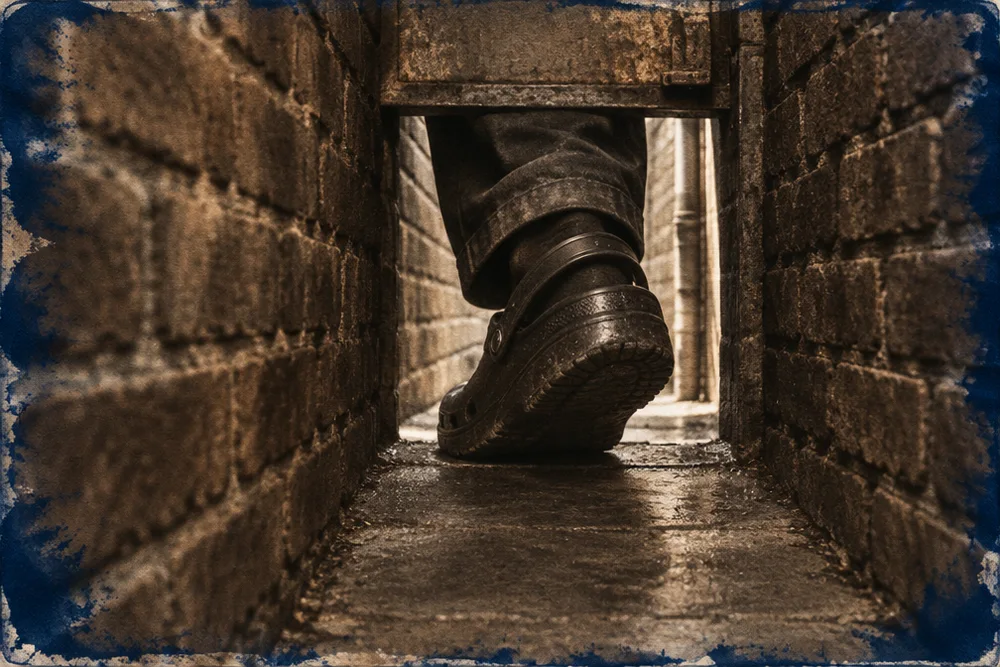
Basil nodded. He slid the photograph under his arm and moved toward the passage. His clogs made a soft rubber scrape against the floor. At the low section he paused and turned his head to look back at her, leaning away from the soundless opening.
“You have the drawing,” he said. “The pencil’s gone, but I can mark the measurements later.”
“You have the drawing too.”
“Then neither of us has to remember the numbers.”
He crawled the last few feet to the hatch. The passage narrowed there, its brick sides close enough that his vest brushed one wall. Yvette stood where she could see him without blocking the way. The darkness gathered around his shoulders, but his white hair remained visible until he dipped his head.
At the opening, he passed the photograph through first. It disappeared from Yvette’s view. Then his left hand found the lower sill. He tested it, eased his head and one shoulder through, and wriggled forward without putting weight on his bandaged wrist.
“How is it?” she called.
His voice came back muffled through the brick. “Tight. Not as tight as the board.”
“Can you get your feet through?”
“I have not yet tried to become a board.”
She heard the dry rasp of his oilcloth vest against the frame, then the dull thump of a clog landing outside. The second foot followed. A moment later the passage was empty.
Yvette kept her position and watched the hatch. For a few seconds, nothing moved. Then Basil’s hand appeared beyond the frame, palm open, and withdrew again. He had not reached back inside. He was standing clear of the sill.
“I’m out,” he called. “The alley. The actual alley.”
Yvette went to the opening and crouched. Through the low gap she could see the ground outside: rough pavement, a shallow gutter, the pencil lying near its edge. It had rolled farther than she expected. A small piece of pale sky showed above the wall.
Basil was outside, just beyond the hatch. He had the photograph in both hands now, protecting it from the damp. “I can see the alley mouth,” he said. “No pool.”
“And the door?”
“The door is still a door.” He leaned away from the opening so she could see farther past him. A narrow strip of street lay behind his shoulder. “The ordinary kind.”