The Fourth Tick Went Missing
Page 130 of 270
Chapters
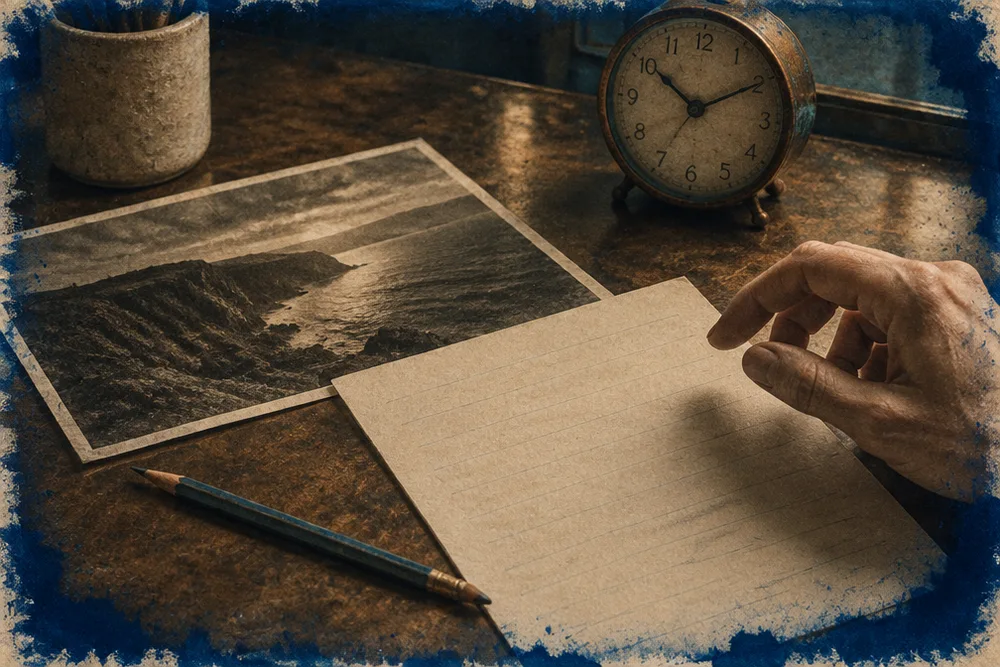
Yvette went to the Blue Office and fetched the removal photograph from her coat pocket. She unfolded it on the desk beneath the fast clock. The picture showed the mural before the first elbow tile had been pried loose: the swimmer’s painted arm reaching toward the join, the blank elbow space she and her mother had left unfinished. The photograph had been taken for the buyer’s inventory, a flat record of condition and dimensions.
She had meant to put both names on it before the handover. The back had a blank line for notes. She kept the pencil beside the carbon-copy passes, where she could see it. The prints outside the office did not follow her in. Their route ended at the street door; the wet marks had not spread into the rooms beyond the deck.
Basil appeared in the doorway. “You writing?”
“Thinking.”
“That’s usually worse.”
“For whom?”
“For whoever’s waiting.” He nodded toward the phone, then toward the dark pool beyond her shoulder.
She looked at the line on the photograph. It was tempting to write something that would make the night legible: that the marks matched her boots, that the route ended where she remembered standing, that the apparent approach from the ladder had no source. But a report could list observations; it could not turn the prints into proof of a message. She did not yet know what she would tell the crew when they came at six.
“You remember my mother asking me to stay?” she said.
Basil’s eyebrows lifted. “I wasn’t there for that.”
“You heard the door.”
“I heard it close.”
“Did you ever ask me why I left?”
“No.” He leaned back a little, his listening posture returning. “I thought you’d tell me if you wanted to.”
“That’s reasonable.” She turned the pencil between her fingers. “It’s also an easy way not to ask.”
He nodded. “Yes.”
There was no comfort in his admission, but it was clean. The old omission about the ticks remained, and so did the choice he had made. Yvette did not have to decide what to do with it tonight.
She wrote the time from the phone display on the photograph’s reverse, then paused. The buyer’s sheet would record condition. Her own notes could record where the prints had appeared, if they stayed long enough to be seen in the morning. A description would not settle the cause. It would keep her from having to pretend the marks were not there.
Outside, the cooling pipes gave a small metallic click. Yvette held the pencil above the paper and listened for the next sound. None came. She set the pencil down without answering it.