The Empty Chair Was Yellow
Page 94 of 153
Chapters
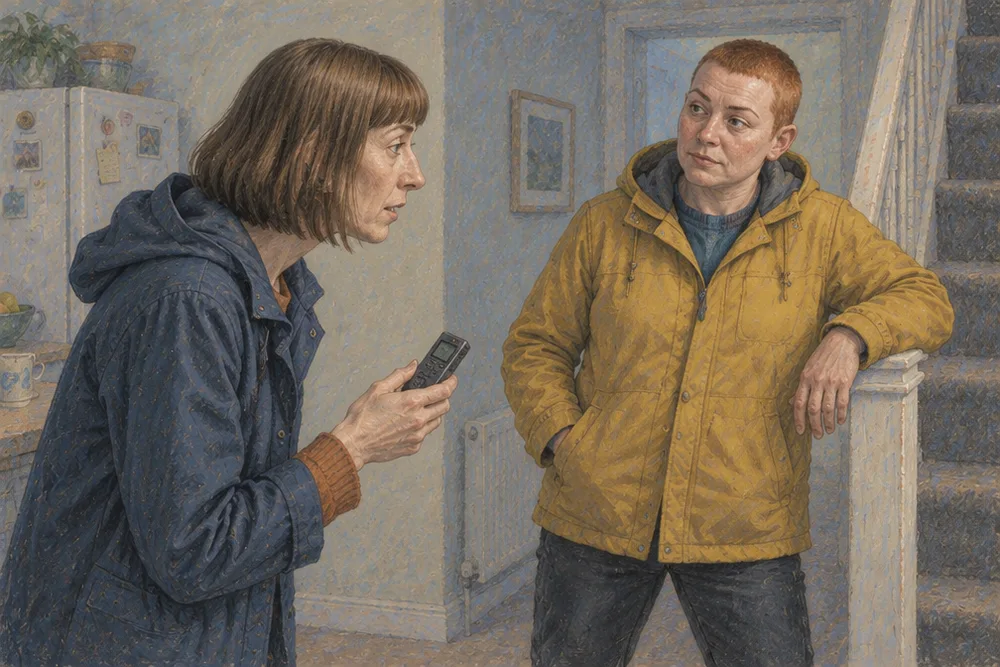
Nell did not speak immediately. Outside, a van reversed somewhere along the street, its warning beeps muffled by the kitchen window. Tessa waited. She had made a habit of filling quiet with the next question, the next detail, something useful enough to protect them from not knowing what to say.
This time she kept her mouth closed. The silence was not a failure to finish the recording. It was part of the listening.
“You kept the anniversary wording out,” Nell said at last.
“Mostly.” Tessa took the machine and opened the file details. “The version I started on Sunday is still here, but it’s marked unreviewed. I won’t deposit it as the account.”
“What about the three people who told you Mum pulled the chair out?”
“Their accounts all used my caption. I found it in the anniversary material. They weren’t independent memories.” Tessa could feel the old defensiveness rising, the wish to explain that she had not invented the story, only helped it along. She let the explanation stay unsaid. “That doesn’t mean they lied. It means I can’t use them as confirmation.”
Nell’s gaze shifted to the recorder. “So the family tribute is gone.”
“The cut I promised, yes.”
“You did promise it.”
“I did.” Tessa pulled her hands into her lap. “I’m sorry. I can send everyone a note before I send anything to the library. I’ll say the tribute has changed, and that you haven’t approved the recordings.”
Nell leaned back against the counter. The move made the kitchen seem smaller, as if the furniture had been arranged to hold them in place. “I don’t want my name in a note explaining why I didn’t approve it.”
“It won’t be.”
“And you’re not asking me to stand next to you when you explain?”
“No.” Tessa took a breath. “I want you to hear it because you knew her. That’s all.”
Nell looked down at the mug. “I knew a lot of different versions of her.”
There was no accusation in the sentence, which made it harder to answer. Tessa remembered the parts of June’s illness that she had seen from near and far: the errands she managed, the evenings she missed, the quiet systems Nell had built around their mother’s needs. She had spent years calling her own absence work, distance, timing. She had let Nell’s competence make the rest of the story easy.
“I know,” she said.
“Do you?” Nell asked, not sharply. More tiredly than anything.