The Empty Chair Was Yellow
Page 65 of 153
Chapters
She went back to the table and drew a clean line through one phrase on her inventory sheet. She had written June’s records, then crossed out June’s and replaced it with shop. The small correction mattered. A record could belong to a business without making its owner a symbol. The cashbook showed what had been entered; the rest required people to speak for themselves.
The light at the window had turned the color of dishwater. Tessa gathered the loose papers and stacked them square, then left the box near the wall where the clearance crew would not mistake it for rubbish. She put the meter card on top, ready to take downstairs, and kept the inventory sheet in her hand.
At the bottom step she heard the recorder’s button click again. Idris had finished, or paused. The door to the shop stood open, and the warm detergent smell rose past her. She did not call down to ask what he had heard. His account was his to review; the same rule applied whether she liked the wording or not.
Tessa put the meter card on the counter and took one step toward the kitchen door, intending to ask Nell about the appointment cards tomorrow. She stopped. There was no need to turn the call into another interview. Nell had answered what Tessa asked, and Tessa had heard it. For now, that was enough to change the way she sorted the papers.
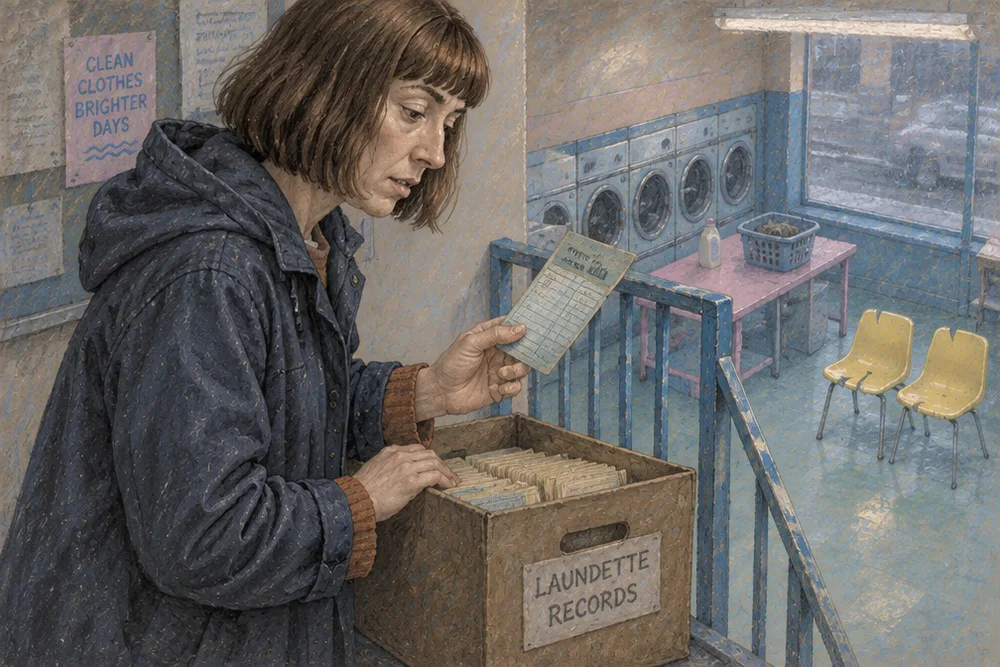
The cashbook had not proved that June accepted the chair, or refused it, or felt no need of anyone. It had shown refunds made the morning after the flood, and a woman paying attention to what other people had lost. Nell had shown Tessa a different kind of attention, given in waiting rooms and bathrooms while Tessa was elsewhere. Neither account erased the other.
She returned to the table and added a note to the records box: Do not discard; review with Nell. It was a modest instruction, with no claim to settle anything. Tessa pressed the label flat with her palm. Downstairs, the empty washer began its spin cycle, a hollow turning sound that traveled up through the floor.
She had once treated her absence as a gap in the evidence, proof that nothing had happened that she did not know about. The gap had been full of other people’s work. She could no longer use it to say June had managed alone.