The Empty Chair Was Yellow
Page 26 of 153
Chapters
“I can take it down.”
“You can. But it’s already been read.” Nell’s voice softened, though not much. “I’m not saying that to make you feel bad.”
“I do feel bad.”
“Then don’t let that decide what you record.”
Tessa leaned forward, elbows against the island. It was the way she listened, people had told her: as if she might close the distance by giving it her weight. She tried to sit back. “What do you think happened?”
Nell’s expression changed, not to anger exactly but to the look she wore when someone had asked her to account for a decision that had seemed obvious at the time. “I don’t know. I wasn’t there.”
“You were in school.”
“I know where I was.”
“I’m not accusing you.”
“I didn’t say you were.” Nell flattened a piece of cardboard. “You keep asking what happened at the shop, but the thing I remember is what happened upstairs later.”
Tessa took her hands off the counter. “When?”
“When Mum was ill.”
The phrase had always been a door in the family’s conversations. A door that opened onto details Tessa thought they had discussed and Nell thought they had settled; details that could be named in passing but not inspected. “We’re talking about the flood.”
“I know.”
“How are those connected?”
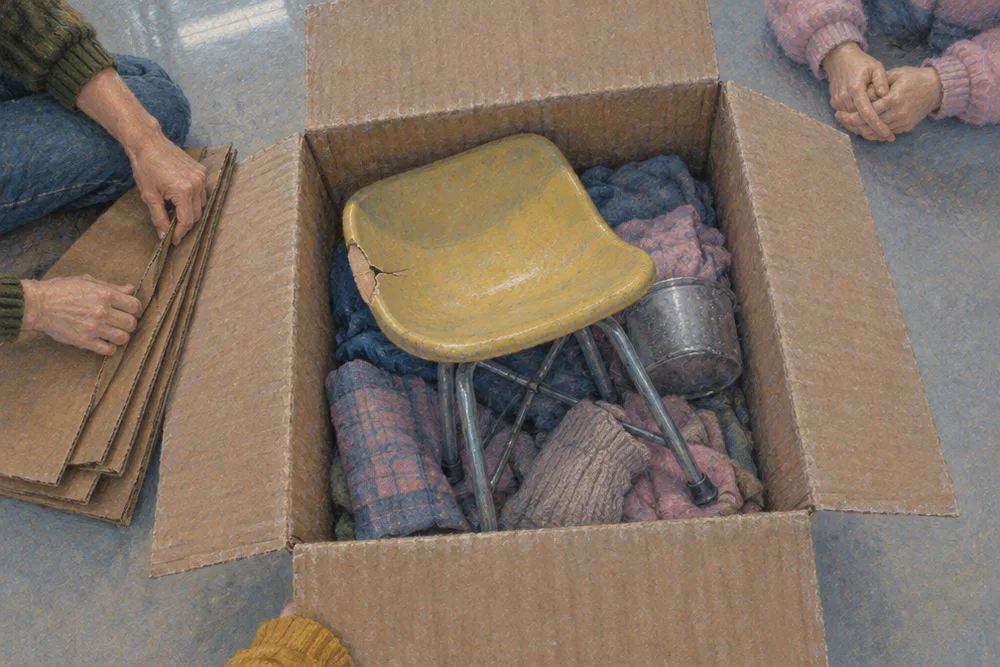
“You want the story to prove something about her.” Nell folded the cardboard again, creasing it hard. “That she never needed help. That she was always the one standing, making room for everybody else.”
“I never said that.”
“You don’t have to say it. You put it in the sentences.”
Tessa felt her face warming. “I’m recording what she told us.”
“You’re recording what you remember her telling us.” Nell looked directly at her. “Those are different things.”
The shop’s fluorescent lights made the damp marks on Nell’s coat look black. Tessa could not remember if June had worn the teal tabard the night she told them the story, or if that was a detail assembled from a hundred ordinary evenings at the counter. She could remember her mother’s hands, forearms strong and brown from work, elbows tucked close as she leaned toward them. She could remember the chair. Its color had come slowly, after a pause.
“She told it at home,” Tessa said. “After the flood.”
“Yes.”
“She said the street was under water, and people came in through the front because the lane was higher.”
“Yes.”
“She said they kept everyone in the shop until it was safe.”
“Yes.”
“And that one woman was still standing, so Mum pulled up the chair.”
Nell lowered the cardboard. “That’s what she said.”