The Empty Chair Was Yellow
Page 20 of 153
Chapters
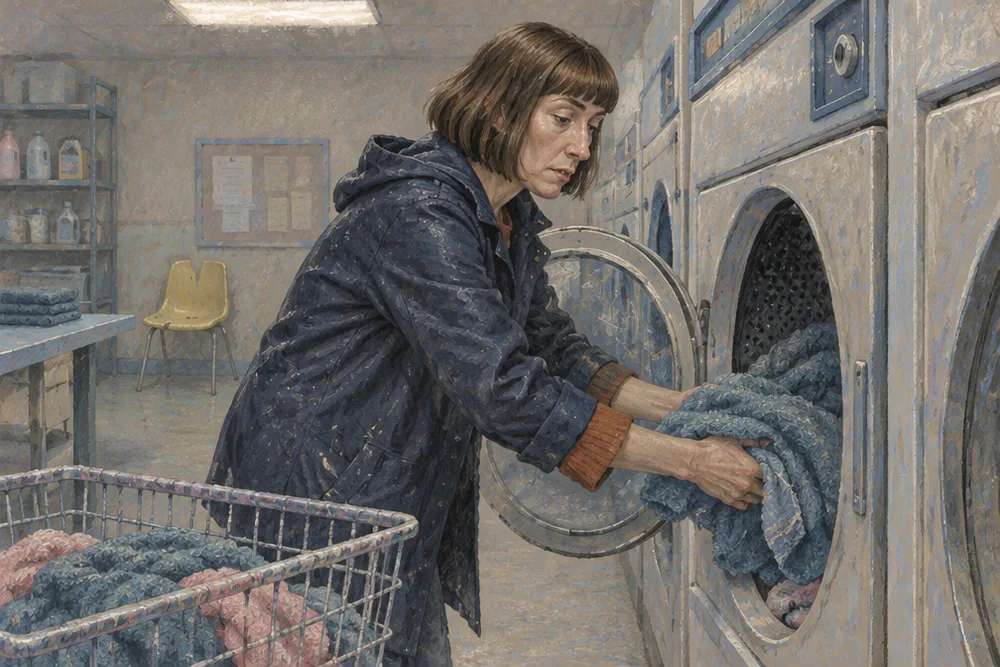
She moved the towels into the dryer, one at a time. The first was heavy and cold against her wrists. She shook it out before dropping it in, a habit learned from June, who had insisted that a towel folded over itself would take twice as long to dry. She added the others, fed coins into the slot, and pressed the worn button. Nothing about the task required a witness.
Her phone buzzed. A message from Nell: Still on for six. Have you got the opening sorted? Tessa read it twice. She typed, “Mostly,” then deleted the word. “I’ve started it,” she wrote instead. She did not mention Idris’s account, not yet. She did not know how to explain the change without making him sound like a complication she had to manage.
The message sent. Tessa put the phone away and watched the dryer. A strip of towel appeared at the round window, disappeared, appeared again. She thought of the line she had recorded: “My mother was always the one who made room for people.” The sentence had been meant to tell the listener who June was. Now she wondered whether it said more about the person who had chosen it. A woman who made room. A mother who never needed it herself.
The first time June told the chair story, Tessa had been at the kitchen table upstairs, sorting bills into piles. June had come in carrying a cup and said, “There was one person still on their feet.” She had not spoken about her own legs or the cold floor or the ache in her back. Tessa remembered the room’s yellow light and the way June had kept her elbows tucked close, as if she could make herself smaller without meaning to.
The details were familiar because they had been repeated. The movement of the chair was not. Tessa had never pictured it until Idris said the customer moved it. She had pictured June pulling it over, offering it, turning an ordinary shop chair into proof. The picture was hers now, not an old memory.
At five minutes to six, the dryer clicked off. Tessa emptied the towels into a plastic basket and folded them on the island. Their rough edges caught against her fingertips. She made the first pile too tall, so it leaned toward the edge; she split it in two. The work was uncomplicated and still managed to take her attention away from the recorder in her pocket.