The Empty Chair Was Yellow
Page 151 of 153
Chapters
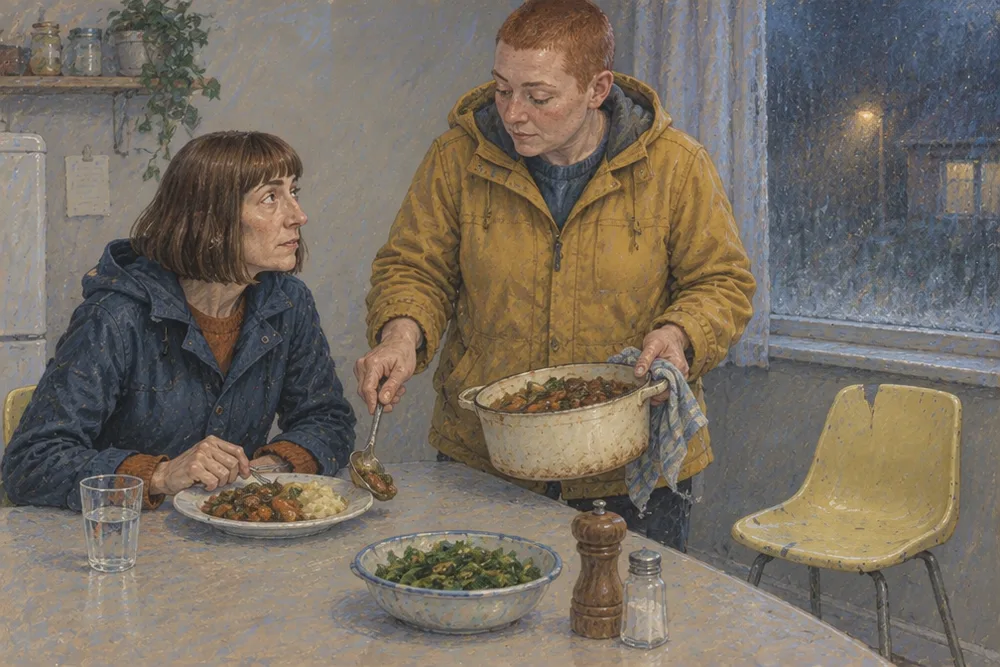
She had meant to take it to the second-hand shop. She had meant to keep it in the hall until she decided. Each intention had left it where it was, a small, bright piece of the old premises among the plain kitchen furniture. The seat looked cleaner than it had in the shop, but the polished patch in the middle still caught the light. Its worn edges and split rim had travelled with it.
“I’ll get another chair,” she said, starting toward the cupboard where the folding one was stored.
“You don’t have to.” Nell had taken out two bowls. She glanced at the yellow seat, then at Tessa. “That one’s fine.”
Tessa stopped before reaching the cupboard. She could still hear the familiar instruction beneath her own words: make room, make sure everyone else has somewhere to sit, keep moving until nobody can accuse you of needing anything. Her mother had been generous; that was true. She had also let people call her tireless, as if work were the same thing as a preference. Tessa had spent years holding those ideas together by insisting that June never took the chair.
The insistence had become a kind of care. If June had never sat, then she had always been needed; if she had always been needed, Tessa had not been wrong to remember her as the person who kept the shop and family from coming apart. But the chair had never been evidence. It could not say who had sat in it, or when. A split in its rim did not settle a memory.
She crossed the room and pulled it out from the wall. Its feet rasped softly over the boards. The split in the rim pressed against her palm, an old flaw she had once imagined as part of the story’s evidence. It proved nothing. It was simply the chair’s damage.
Nell put the bowls on the table. “It wobbles?”
“No.” Tessa tested one of the legs with her hand. “It’s fine.”
“Then sit down before the food goes cold.”
Tessa sat. The seat was cool through her trousers. She felt its narrowness beneath her, the slight give when she leaned back, the floor steady under all four legs. From the chair she could see the whole small kitchen: the washed-out paint above the kettle, the dish towel folded over the oven handle, Nell standing at the table with one hand on the lid of the stew. Nothing in the room asked her to make a story of where she sat.