The Empty Chair Was Yellow
Page 14 of 153
Chapters
“But June noticed they were uncomfortable.” The sentence emerged with the soft authority of an answer supplied for him. Tessa heard herself doing it and hated the sound. She leaned forward, the way she did when listening closely, and tried to turn the recorder slightly toward him. “She was very good at noticing that sort of thing.”
“She was good at noticing the machines,” he said. “That’s what I remember her doing first. She knew which ones had gone quiet.”
A flush rose beneath Tessa’s collar. “I’m not suggesting she didn’t.”
“No.” Idris looked down at the toolbox. He had not raised his voice. “You asked what I saw.”
The recorder took the silence, too. On the display the seconds ticked onward, indifferent to whether they were useful. Tessa imagined Ruth Sayer at the local-studies desk listening to a recording full of pauses and leading questions. She pictured herself explaining that the pauses had context. Then she pictured trying to explain why she had asked Idris what June noticed when he had already answered.
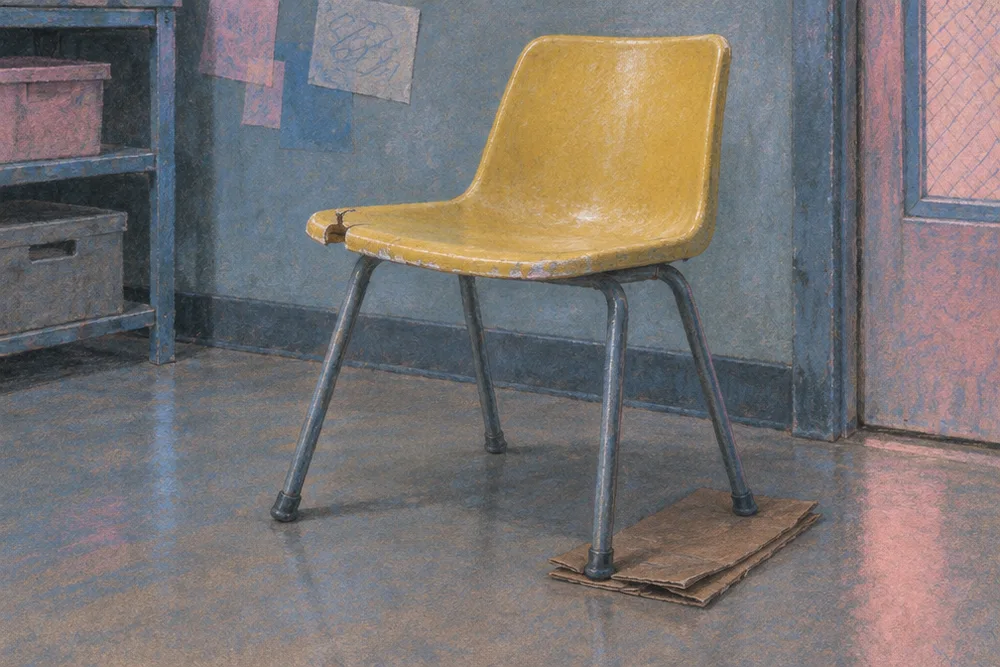
Tessa glanced at the chair. Its enamel had chipped to gray along the front edge. The split in its left rim was a narrow dark line, the same one she remembered from childhood, though she had no memory of the flood itself. She had been twenty-seven, away for work, and had returned after the water drained to find June mopping the shop floor and telling the story as if the worst part had been the ruined soap powder.
“I’m trying to get the sequence right,” Tessa said. “We’re making a record, not a tribute that has to be perfect.”
“You called it a tribute in the first bit.”
“I said it was for the library.”
“You said your mother never let anyone stand when there was a chair.”
Tessa’s mouth opened. She had said that, with a small laugh, as if it were a family saying everyone could recognize. “That’s how she told it.”
“Maybe.” He shifted his toolbox to his other hand. “I’m not saying she didn’t. I’m saying I saw the customer move the chair.”
“You remember the person?”
“No.”
The answer was immediate. Tessa had expected a name, perhaps a detail that could anchor the account: a red scarf, a child asleep against someone’s shoulder, a face remembered from the street. Instead she got a clean blank. The unnamed customer stayed unnamed in both versions. That should have made the story easier to contain. It did not.