The Empty Chair Was Yellow
Page 137 of 153
Chapters
“I don’t want to present them that way,” Tessa said. “There isn’t one tribute, and I can’t speak for Nell. Idris’s track isn’t part of a memorial to Mum.” The words came out more evenly than she expected. She had rehearsed them while waiting for the bus, then stopped rehearsing because each version sounded like an argument she needed to win. This was only a correction to a sentence.
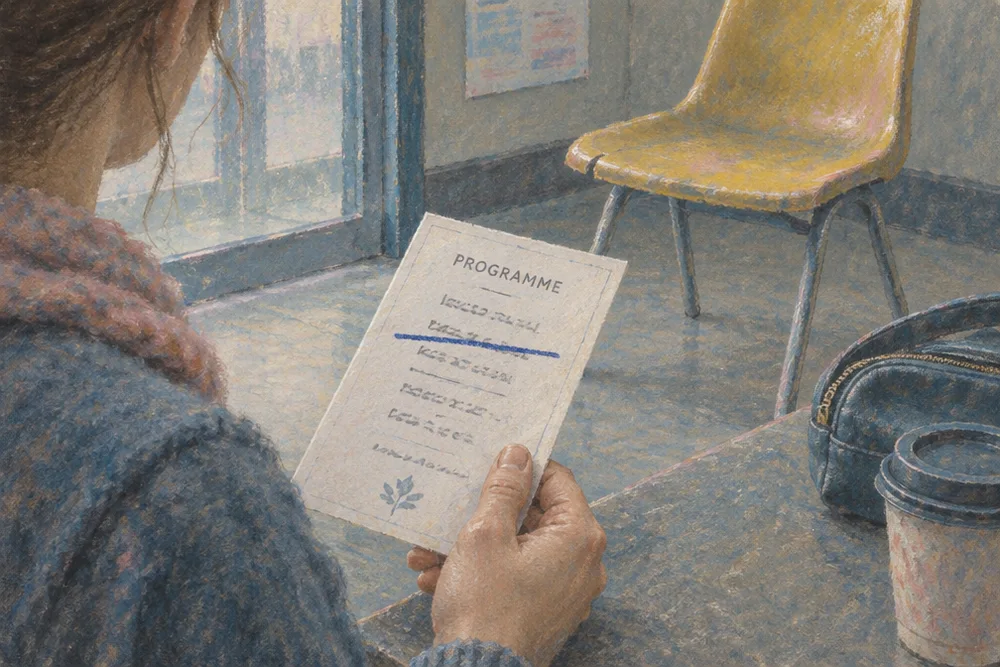
Ruth crossed out the phrase with a neat line of blue ink. “I’ll change the introduction when I speak. The online listing is separate. We can remove ‘family memorial’ there too.” She glanced toward the lending floor, where a child was trying to reach a shelf of picture books while a parent held a tote bag open. “No one needs to make a ceremony out of an accession.”
Tessa let out a breath she had been holding high in her chest. “Thank you.” She did not add that she had once wanted the ceremony. For a while she had imagined the opening as a place where the town would hear the story in the order she had received it: June’s story first, then a measured note that another person remembered differently, then her own admission, placed carefully at the end. A sequence could make disagreement look like a family of facts arranged in a good room.
But the files were not chapters in a memorial. Each had a separate permission form, a separate name, and a separate way of being listened to. June’s version existed because Tessa remembered her telling it. Idris’s existed because Idris had asked for a deposit in his own name. Tessa’s existed because she had finally said what the story did to her. Nothing about the catalogue made one of those accounts a doorway to the others.
Ruth handed her the revised programme. The line now read: Three linked recordings concerning the laundrette and the flood, deposited by Tessa Gleave and Idris Calder. The public introduction would describe them without a family label. “It’s plain,” Ruth said. “That’s generally what we’re aiming for.”
Plain did not mean empty. Tessa read the line once more, then folded the programme into her notebook. Her mouth had gone dry, but the tightness behind her ribs had loosened. She had not come to defend June from an audience. She had come to make sure the audience did not mistake her for everyone who had been there. That distinction was small on paper. It had taken her a long time to learn it.