The Empty Chair Was Yellow
Page 131 of 153
Chapters
Ruth glanced at Tessa, not unkindly. Tessa had not cut the question. Idris had reviewed the file, listened to it in full, and approved it with the question left intact. On his review sheet he had written, Keep the pause. It is yours, not mine.
The transcript was accurate. Tessa checked the words against it, including the question. She crossed out nothing. When the audio ended, the headphones gave back the room’s soft radiator tick.
“The transcript can carry an editorial note,” Ruth said. “Something like: speaker-reviewed transcript; pauses and repetitions retained. But it shouldn’t argue with him or explain him.”
“I don’t want it to.” Tessa took off the headphones. “I think I wanted the question to be less obvious than it is.”
“It’s fairly obvious.” Ruth’s arched brows lifted. “That may be why it’s useful to leave it.”
Tessa felt the old reflex to make the record neat, to put the awkward piece somewhere it would not catch anyone’s eye. She laid the headphones on the table. The first time she had heard Idris’s answer, she had wanted him to add a qualification, some small allowance for June’s way of doing things. He had not. The recording preserved his account, not the version she had hoped to coax out of him. It also preserved her attempt to coax it.
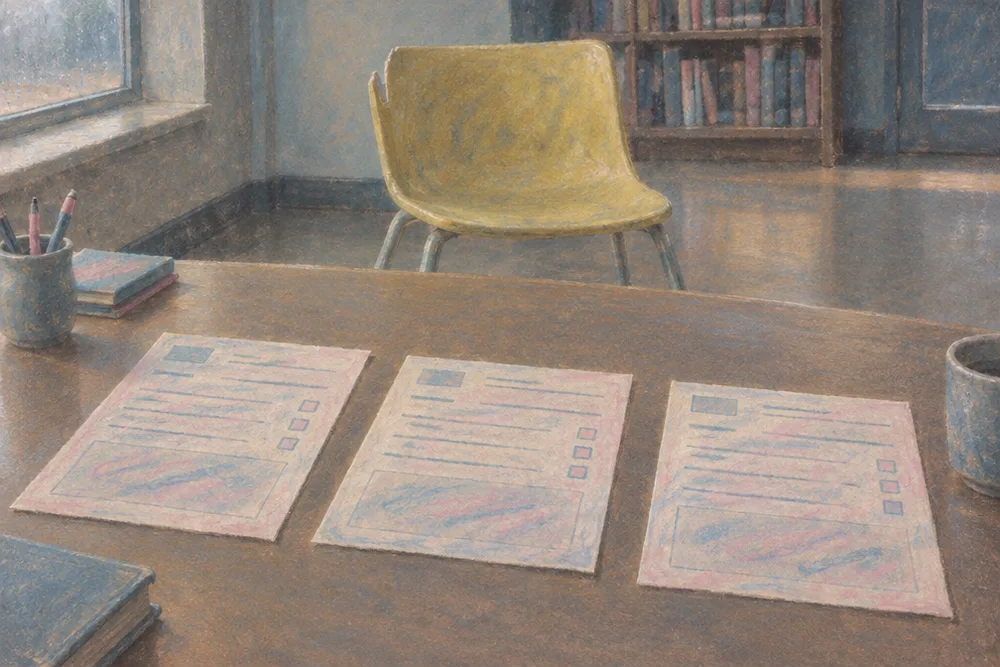
They moved to the permissions. Ruth drew the three forms into a row. Each had the speaker’s name, the recording date, the intended level of access, and a list of possible uses. The library could catalogue and preserve the files, offer supervised listening, and make the transcripts available. Public copying and broadcast were separate choices. Tessa had left those unchecked on all three forms.
“The linked entries will let a searcher move between them,” Ruth said. “They won’t imply that one is evidence for, or a response to, another. Separate credits. Separate permissions. If a permission changes, we amend that entry, not the others.”
“Could someone still call them conflicting accounts?”
“Someone could call them that in an essay. We shouldn’t make that the catalogue’s claim.” Ruth leaned over the screen and showed Tessa the draft record. “The subject terms can include the laundrette, the flood, oral history, and the street. We can link the entries to the same event. The relationship is that they concern the same night. That’s all we can responsibly say.”