The Empty Chair Was Yellow
Page 116 of 153
Chapters
The third track would sit alongside the others, not above them. A listener might hear it first or last, or not at all. Someone might come looking for the flood and find Idris’s name. Someone might search June’s name and hear her only through the daughter who remembered her. Tessa could not decide what any of those listeners would carry away. She could only make sure the catalogue did not tell them which account had been granted authority.
She had spent years believing that a tribute was a kind of repayment. Her mother had worked, and Tessa would preserve the work in a form that made it clear what sort of woman had done it. The problem was that preservation could become another way of using June: fixing her into an image that kept Tessa from having to wonder what she wanted, or whether she had wanted anything different from the people who stood beside her.
The new recording did not repay June. It did not make the illness easier, or change the last four months when the sisters had arranged care between them and argued over who could stay upstairs. It did not make Tessa’s absence less real. It gave her a place to say that she had wanted a story in which needing help was not part of her mother’s life. That was not a confession that would repair anything by itself. It was, at least, a sentence she could stop disguising as a fact about June.
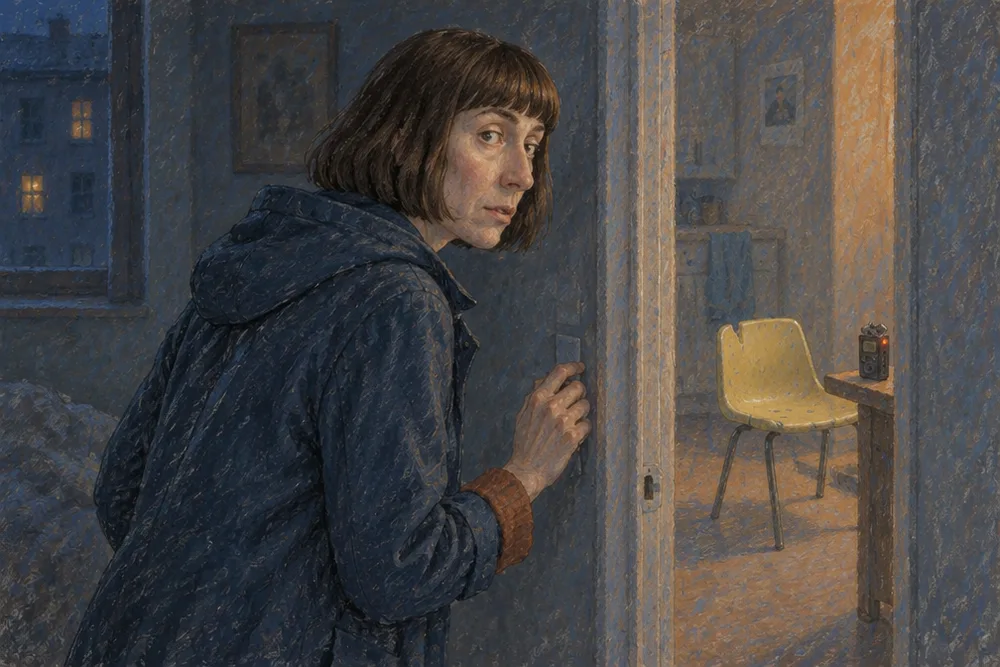
Downstairs, the chair would wait through the night. In the morning, Tessa would carry it out. She would not put it in the library, where it could acquire the authority of an exhibit. She would take it home, because she wanted it and because it was useful, and neither reason needed to stand in for the other. It could be a chair at her table. It could also be the yellow chair from the laundrette. It did not have to prove who had pulled it up.
She turned onto her side and closed her eyes. In the dark she could not see the color, but she knew where the chair stood: back to the wall, facing the counter, its left rim split. The recorder held three tracks. No verdict. No composite scene. In the morning, the keys would leave their hands.