The Dead Take Attendance
Page 150 of 291
Chapters
“Euan knows a broken machine when he sees one.”
“That isn’t the same as wanting to leave.”
Quenby looked down at the table. “No.”
The word stayed there after Lorna had gone to the door. She opened it, then hesitated, one hand on the latch. “I’ll be back before dark.”
“You needn’t hurry.”
Lorna went out. The door shut with a gentle click. Quenby sat alone in the kitchen, listening to the house settle around her.
The house held sounds from every room: a pipe ticking, the wind worrying at the eaves, the clock above the stove. Quenby rose too quickly and the room tilted. She gripped the table until her knee obeyed. The cupboard door still stood a finger-width open. She crossed to it and pulled it open.
Inside were jars, folded cloths, and the tin in which she kept the old counterfoil copies. The tin was empty now. She had given Rob the location of the cave cache before the fall, and the originals had gone to Lorna. Still, she checked the shelf, then the one below it, as if a paper might have grown back in the dark.
The cupboard gave a small creak. Quenby felt again its edge across her ribs, the flour-dry air in her throat. It had been a short fall, no great distance, but she had been pinned there long enough for the house to change around her. She had called Rob. She had given him the cave and the counterfoils. She had not told him what to do with Cal.
A ferry clerk’s duty was to read the register, take the fare, and mark the crossing. The clause had called the surrender an act of account. Quenby had hated that phrase. It made sacrifice sound like balancing a till.
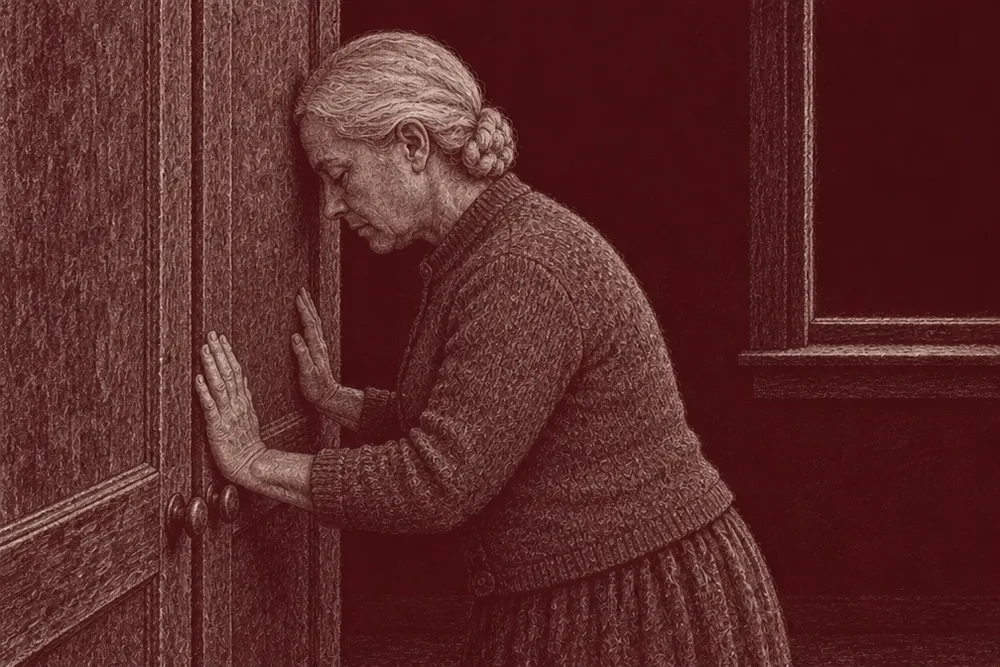
She closed the cupboard with both hands and leaned her forehead against the wood. “I’m not a blank,” she said.
The words came out small. No one answered.
Outside, a gull cried once above the rooftops. The bakery’s chimney had begun to breathe again, a thin thread of smoke drawn toward the water. Quenby imagined Iseabail behind the stone, close enough to smell bread but not close enough to touch it. She imagined Nessa at the shelter with the borrowed coat hidden away. She imagined the two elders whose names she had pushed aside in the ledger, their replacements’ island graves grown soft with grass.
Then Cal: seven years old, dark cowlick flattened by rain, one mitten on his hand. He had been frightened of deep water and stubborn about being carried. Quenby had promised him she would keep him safe. It was a promise made before she understood that safety could have another person’s face.