The Dead Take Attendance
Page 114 of 291
Chapters
“Not in the drawer under the shelter bench.”
“I’m not stupid.”
Quenby’s expression softened by a fraction. “No. You’re angry.”
Lorna zipped her jacket. “I’m going to get dry.”
She lifted the envelope and checked its seal once more. The names inside remained legible. The name she needed most had no shape she could preserve, and when she left the kitchen she carried that absence with her as carefully as the paper.
By the time Lorna reached the landing, the tide had erased the route to the west caves. The water lay smooth beyond the gangway, except where the ferry’s mooring lines cut dark angles across it. Rob was at the edge of the quay, checking a shackle with a spanner. He lifted a hand when he saw her, then returned to the work.
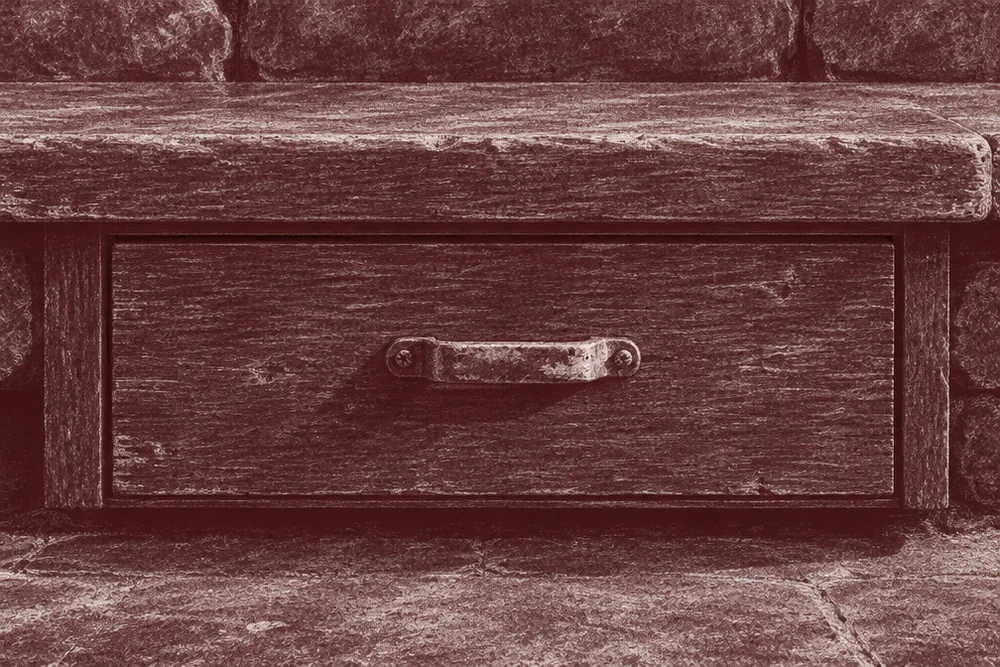
She stood by the shelter and looked through its open side. The bench faced the water. Under it, the ledger drawer sat flush, its handle dulled by countless hands. The shelter’s inner depth was ordinary in daylight, stone walls meeting at sensible angles. Lorna did not go inside.
The envelope rested against her body beneath her jacket. She knew what it contained and what it could not contain. Two falsified crossings, saved in Quenby’s handwriting. One erased crossing, its only written evidence dissolved in a cave before Lorna could touch it. The missing line did not become less real because it could not be read.
Rob tapped the shackle into place. “You coming down to help?”
“No. I’m going home.”
“You told your mother?”
“Yes.”
He nodded. No more was required of him. The work of the boat continued, practical and bounded: a rope secured, a fitting checked, a ferry kept ready to cross.
Lorna turned away from the shelter. Behind her, the water pressed against the landing stones and slipped back. She did not look for the cave mouth. At this height it was hidden, and even if she could see it, the tide had taken the last trace that might have carried Cal’s name in ink.
The counterfoils would have to stand beside the ledger, not in place of it. Quenby would have to speak for the first crossing herself. Lorna understood that now—not as a lesson, but as the shape of the work still waiting.
She started up the road. The wet hem of her trousers brushed her boots. The ferry bell did not sound, and the shelter made no call. The island let her leave the landing with the two surviving records and the one name that could only be spoken.