The Breathing Wall on Floor Minus One
Page 179 of 202
Chapters
Gilda looked at the vent. A weak breath escaped it, barely enough to move the dust on the sill. It did not carry the kitchen clock. It did not return her mother’s final evening. The building had opened its route, and the air was moving outward, but the difference between a returned fragment and a restored life was now plain to her. She could keep a record of the loss. She could not make the record into the evening itself.
The inspector asked for the caretaker’s maintenance log. Gilda retrieved it from the table where she had left it under the emergency-light cord. The black cover was worn smooth at the corners, and a pale ring from a mug marked the inside page. She had kept it orderly for years: dates aligned, work described in direct language, materials entered in the right column. Before this night, she had believed a clean log meant the building was safe, or at least that she had done her part to make it so.
She opened it to the first record of the recent partition. The entry from three winters earlier was in her own handwriting. Patch and seal basement seam. Moisture reported near laundry wall. Materials: hydraulic compound, mesh, plaster. Authorization: board. Caretaker signature: G. Rennock. In the margin she had drawn a neat check. The date was two days after her mother’s funeral. Gilda had signed the work without looking closely at the wall because she had wanted one thing in her life to be finished and sound.
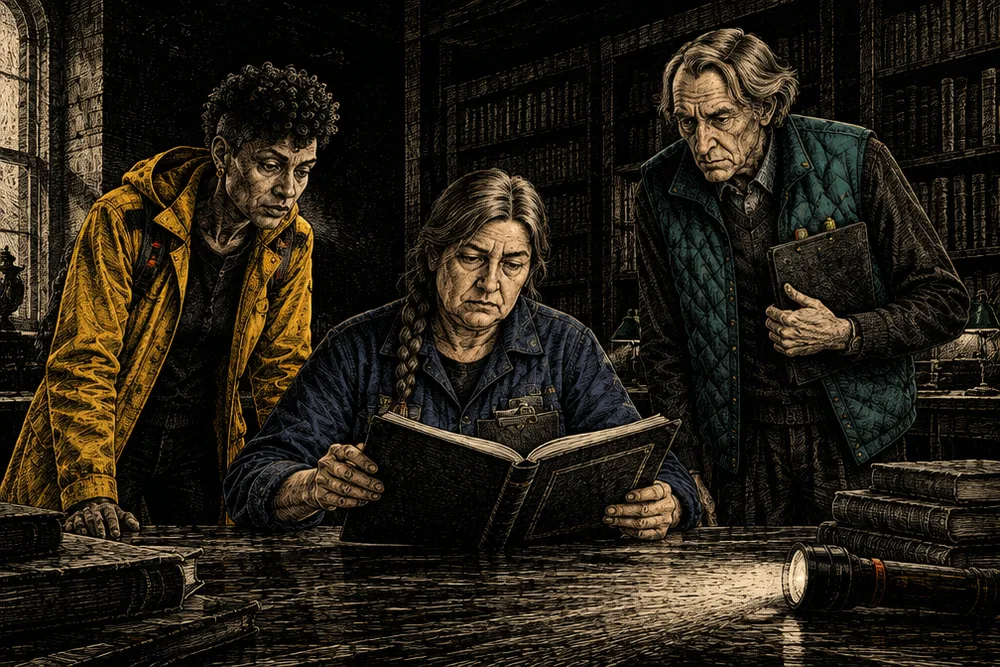
She did not remember the last evening with her mother. She had known that for weeks now, since the condolence card had given her the date and a scrap of phrasing, since the first strange breath behind the partition had made the blank in her feel like a door she had painted over. The entry contained no mention of the cost. There was no column for a memory lost, no line for the person who would wake unable to place a room or face. She turned the book so the inspector could read it.
“This was me,” she said. “I sealed that seam.” The inspector looked up. “You were following the work order?” “Yes.” “Did you know what it would do?” “No.” She could have added that she had thought the repair harmless because the numbers balanced and the surface dried flat. She could have explained that her mother’s death had made her welcome the simple certainty of a task. Instead, she let the entry remain in view, along with the signature that had not changed.