The Bench on the Moving Truck
Page 80 of 152
Chapters
Dot had cleared a space beneath the repair-shop awning by moving a stack of bent chair frames against the brick wall. The bench stood on blocks, its two iron ends dark with old paint, the three oak slats showing the marks of weather and hands. The crescent gouge at the left end caught a bead of water from the awning and held it.
The replacement slat lay across two sawhorses. It was lighter than the old oak, nearly honey-colored, with squared edges that made the worn bench look more worn by comparison. Lenora ran her thumb along its smooth grain, then checked the width against the old seat. She had brought the shop’s bill and the collection tin, though the money was already counted.
“You can sand the whole thing,” Dot said, standing bolt upright in her apron. “Make it match.”
“The gouge stays,” Ada said. She leaned forward from her ankles to inspect the fresh wood. “That’s where people put their shopping bags while they sit.”
“Or catch a sleeve,” Omar said. “It’s not a sacred relic.”
“No,” Ada said. “It’s only the bit we all recognize.”
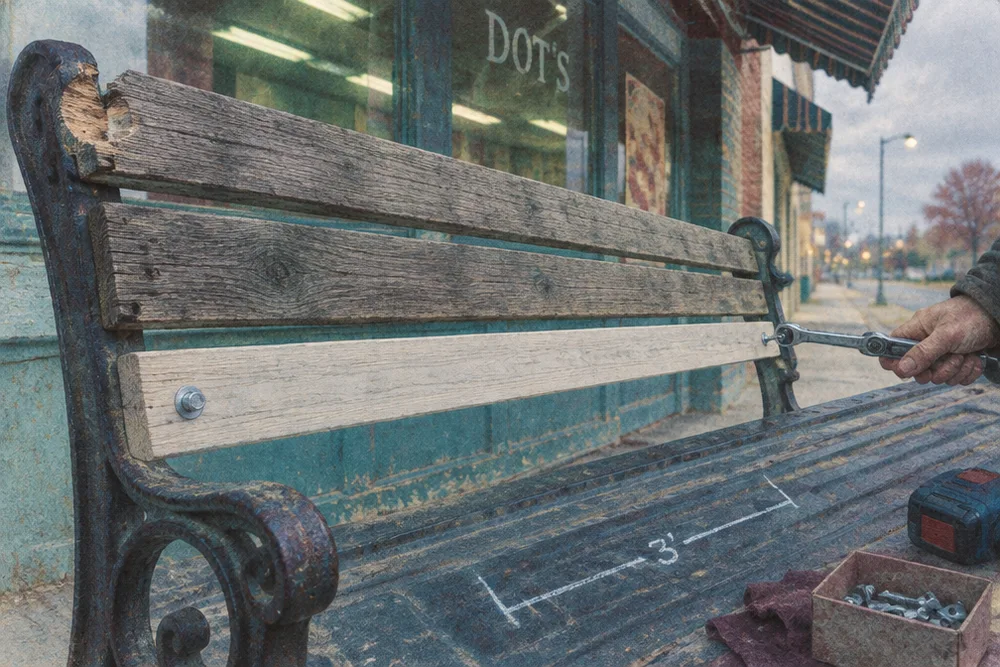
They fitted the new slat without sanding the old ones. Lenora held the iron end steady while Omar worked the bolts through, his forearms braced against the frame. The first screw caught crooked. He backed it out, set it again, and turned the wrench until the metal stopped complaining. Dot held a flashlight despite the daylight, angling its beam under the seat where the old wood had darkened at the joints.
Lenora had expected the repair to feel like finishing something. Instead, each turn of the wrench made the next question more visible: where to set the bench in October, who would pay for the truck, whether anyone could claim it as theirs. The pale slat looked almost too clean to carry those questions.
When the last bolt tightened, Ada pressed her palm to the new wood. “It’ll take weight.”
“We’ll still need to check it,” Lenora said. “The repair shop’s not certifying a public seat.”
Dot gave her a sideways look. “Nobody asked you to make it permanent today.”
Lenora lifted the bench’s left end. Omar took the right. Their hands found the iron at familiar places, where the paint had worn to a dull shine. They carried it out from under the awning and laid it carefully in the truck’s three-foot space. The chalk bracket had smudged under the iron foot. Lenora marked it again after they shut the doors.