The Bench on the Moving Truck
Page 59 of 152
Chapters
“No,” Dot said. “I didn’t.” She turned back toward the repair counter. “That’s the part you keep trying to turn into a debt.”
Lenora stood beside the bench, tape bright against dark wood. Outside, the street was wet from a quick shower. It occurred to her that she had spent months carrying an object called a shared bench while refusing to sit on the memory of a chair somebody had left out for her.
“I can pay you for the space,” Lenora said.
Dot gave her a sidelong look. “You can pay me for the space if you want. You can’t pay me for the chair.”
Lenora felt the old reflex begin: offer cash, then carry something, then make the conversation end with a task that had a measurable weight. She had an envelope in the truck with a modest site fee, folded from what remained of the July collection. She had meant to give Dot the amount without discussing it. “The bench is taking up room you use.”
“For now, it’s taking up the strip beside a wall. I can still get a bike through.” Dot picked up a pencil and set it down again. “If you want to give me money, I’ll put it in the repair shop jar for the bench. Not because I need to be paid to remember you.”
Cal had been quietly checking the wheels on the hand truck. He glanced from Dot to Lenora, then resumed his inspection. Lenora knew the look; he had the same expression Omar wore when an answer had already been given and a second question would only be another way of avoiding it.
“I’ll write it down as a contribution,” Lenora said.
“Write down what it is. Don’t make it say more.”
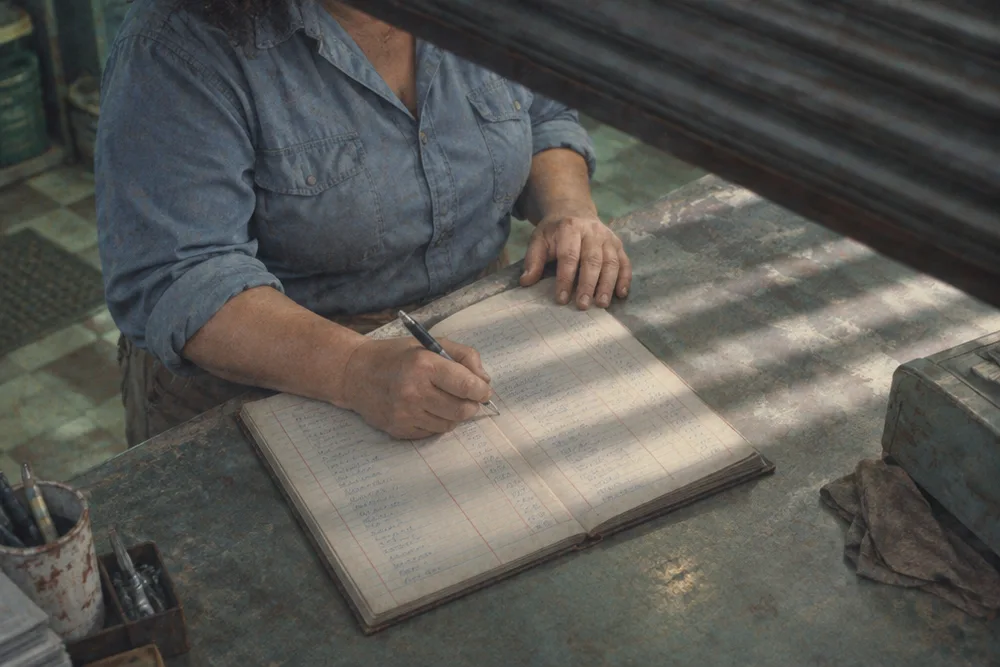
That evening, after Cal had gone and Dot had pulled the shop’s metal shutter halfway down, Lenora returned from the truck with a clipboard. She had been keeping a ledger in the envelope with the bench’s release: fuel, labor, site permission, repair materials, and the names of people who had given money. The columns were cramped, drawn in pencil around a coffee ring. Until now she had written contributions together, as if dollars, hours, storage, and permission were interchangeable.
She took a clean page. At the top she wrote: AUGUST STOP—DOT KEENE’S REPAIR SHOP. Beneath it she made three columns: PAID WORK, VOLUNTARY CONTRIBUTIONS, COSTS STILL UNCOVERED. She wrote Cal’s hours under paid work. Under voluntary contributions, she entered Dot’s permission to shelter the bench and the amount she had offered to the repair jar. She hesitated over the space itself, then wrote: TEMPORARY COVERED STORAGE—NO CASH VALUE SET.