The Bench on the Moving Truck
Page 143 of 152
Chapters
The crewman put the wrench away. The older man shifted the cart closer to his leg, then stepped toward the bus stop. He did not sit down again yet. Lenora understood the caution; the bench had spent a year being temporary. It had learned to look as though it might be taken away.
The board had met in the library’s small meeting room, where a radiator ticked under the window and a stack of folding chairs leaned against the wall. The records had been spread across a table: route notes, repair invoices, access diagrams, weather marks, and the association release from Brindle Court. Lenora recognized her handwriting on nearly every page. Dates, temperatures, people counted, rain direction. At first she had recorded only whether a place had room for a bench. Later she had added whether anyone could reach it, whether they could use it without buying something, and whether it stayed usable after the gate or business closed.
The temporary route was set down in the ledger as a series of addresses, but none of them had been a simple stop. Ada Venn’s sheltered senior courtyard had given the bench a roof and a safe, level place to rest. It had also given it a gate that locked before the night shift ended. Lenora had stood outside after dark with Inez Soto, listening to the metal latch catch. Inez had still been in her green scrub trousers, her quilted jacket zipped to the chin, her night’s work on her face. Her bus had gone. The bench sat twenty feet away beneath the walkway, dry and useless behind the bars.
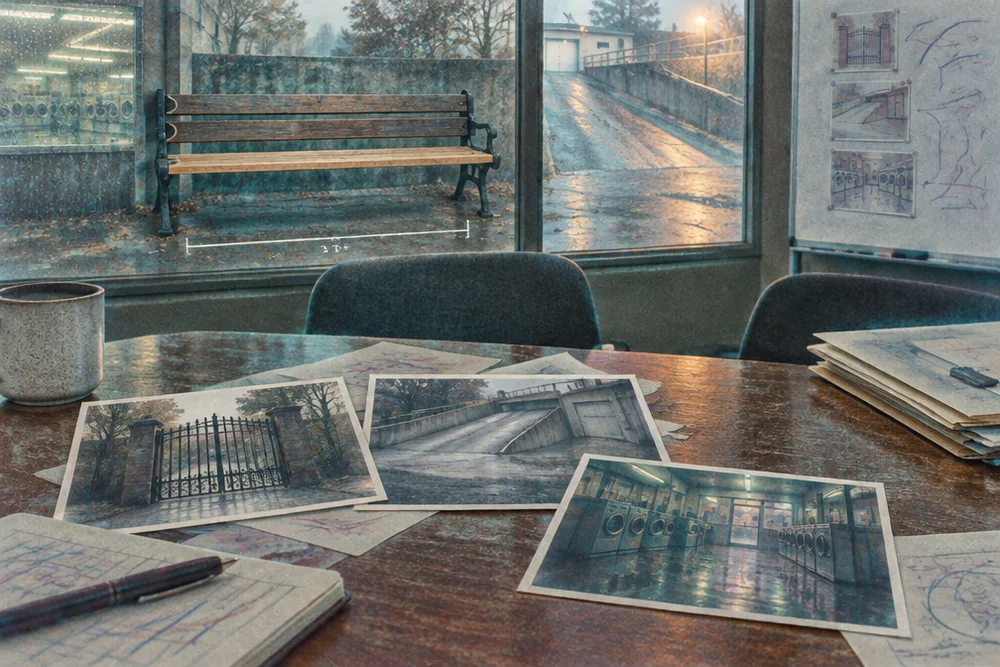
At Ruth Sayer’s sloped driveway, the bench had leaned against the garage wall. Ruth had paid for a level board beneath one iron end, but it still looked as if a person had to ask permission before sitting. Ruth stood in her cream raincoat and square shoes, her neck rigid as she described the early relocation offer she had kept to herself. She had not known what the association would do with the news. Lenora had not known what to say to a woman who could admit the omission but could not undo it.
At the laundromat strip, the bench had stood under a shallow awning, between a vending machine and the end of the parking lane. Malik Boone had bought a wash for one shirt so he could wait out the rain without being told he had to leave. His rust hoodie had darkened at the shoulders. He folded at the waist when he sat, his long fingers moving the shirt from knee to knee.