The Bench on the Moving Truck
Page 117 of 152
Chapters
She and Omar wiped the slats with the rag, working from the old oak toward the new. They did not scrub the crescent gouge. Water had collected there, but the hollow was shallow, and the wood was sound. The replacement slat took longer to dry. It had not weathered into the bench yet; it still looked like a repair someone could point to.
Omar held the far end steady while Lenora worked the cloth along the grain. The slats gave off the clean, damp smell of oak. The rain had stopped, though the gutter still dripped at regular intervals. A drop struck the pale replacement board, spread, and darkened it again.
“We can put a temporary tarp over it,” Omar said.
“That would stop people sitting too,” Lenora said.
“I know. Just asking.” He kept his hand on the iron end. “We’ll need to say what the tarp does, not just what it costs.”
At ten, they put the notebook in the cab and locked the truck. Lenora did not add up the marks. The page held morning visitors, a lunch break, a child’s paper bag, the woman who had stood when the seat got wet, and Inez waiting for her bus. It was not a case for keeping the bench without change. It was a record of why a seat outside closed doors mattered—and of how quickly a useful thing could become unusable.
She left the notebook open on the passenger seat, the page held flat by the clipboard. At the bottom she wrote: “After closing: one rider waited for floodwall bus; did not sit because seat wet. Asked that bench stay available outside locked doors.” She paused, then added Inez’s name as requested.
The truck’s rear lights flickered as Omar checked the latch. Behind them, rain began again, soft at first, then steady. Lenora watched it strike the bench before she climbed into the cab. The numbers made an argument for the location. The water made an argument against its position. Both were true, and neither could be left out of the report.
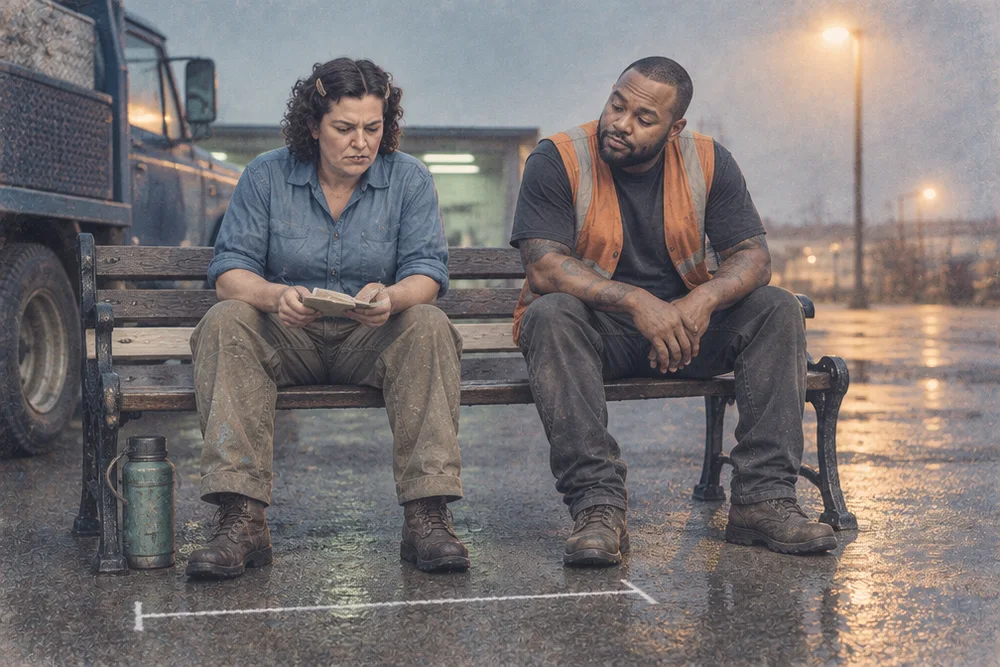
When Omar shut the passenger door, Lenora looked once more through the windshield. The bench stood beside the ramp, clear of the queue, its wet surface reflecting a narrow line of amber light. No one sat there. No one needed to move around it. For the moment, the arrangement was both a welcome and a problem, held in place by temporary bolts.