Subtract Five Hours, Add Oyster Walls
Page 219 of 259
Chapters
Halfway over, the girl asked whether the herbs were for the shop by the store. The grower answered that they were for a kitchen on the mainland, where the bundles would be sold before noon. They began discussing which leaves held best after a night in the damp. Nessa listened with one ear while watching the water. The conversation gave the cargo its proper scale: not goods in the abstract, but food moving between people who had planned their work around a crossing.
At the island float, she brought the boat alongside without a scrape. Passengers went first. One of the growers helped the older passenger up the slope, then returned for the crates. The order took longer than a bare crossing, but nobody had to climb over anyone else’s load. When the final tray was lifted ashore, the boat sat balanced and the gangway remained clear.
Nessa marked the departure in her book. Six passengers. Four crates. No delay beyond the landing allowance.
By midmorning Nessa had taken the boat back across, delivered the growers’ second load, and returned once more with passengers from the island. She ate half a bread roll between tie-offs and drank cold tea from a bottle that had warmed against the engine housing. The pencil figures kept returning to her, more persistent than hunger.
At the basin, she spread the ledger on the chart table. The old calculation allowed nothing for freight because the ferry had no regular load history. It counted only fares, and fares did not cover fuel, crew, inspections, mooring checks, and the float’s upkeep. A passenger service that lost money at every crossing could not be saved by a good morning’s weather.
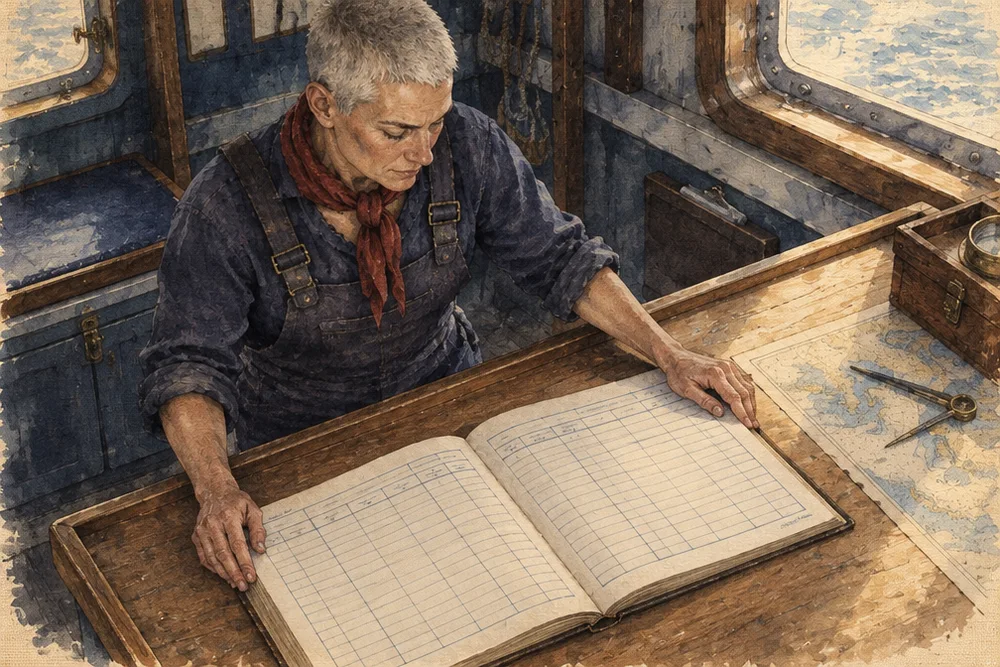
She added the four crates and wrote the amount the growers had paid. It was a modest sum. Then she wrote the market pickup they had avoided, the hand-carrying they had not needed, and the time they had recovered. Those figures did not belong on her operating sheet, not as income, but they explained why the growers might keep using the boat. A one-off load meant nothing. A habit could become a guarantee.
The gray-scarfed woman came down to the quay with the return tally. She had written the crate count and the amounts each grower owed. “We can settle after the market. One of us will bring the whole payment next crossing.”
“You don’t need to pay me in a bundle.”
“It’s easier. We pool the cost.”