Subtract Five Hours, Add Oyster Walls
Page 149 of 259
Chapters
The reserve boat turned toward the old landing again. Its shallow hull rose over the outer ripple, eased down, and made the approach in the narrow band of available water. Nessa counted the seconds between the helm’s corrections. It was not a route she could promise for every tide, and not a berth she could call dependable. It was, for now, the only vessel able to touch that shore.
“How soon can you get a revised quote?” she asked.
“Tomorrow, if the board sends the dimensions.”
“I’ll make sure they do.”
Sabine nodded. She started back toward the shed, taking the chart and the failed report with her. Nessa watched until the oilskin was a dark shape against the gray wall. Then she turned to the crew message and began working out which sailings could be moved without leaving the mainland passengers stranded.
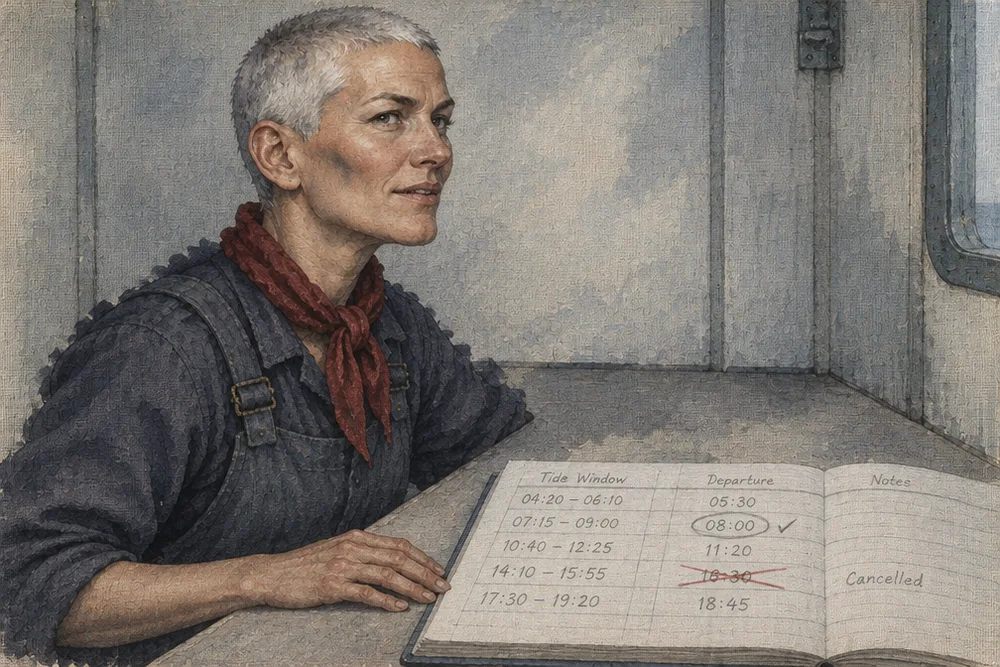
At the ferry cabin, Nessa spread the day’s schedule across the narrow desk. The tide windows were written in pencil because ink made a timetable look more certain than the sea. She crossed out a run that would have arrived too late and shifted its passengers to the earlier departure. Then she called the mainland berth and explained the change herself.
A man on the other end asked if the island stop would be ready by the end of the month.
“No,” Nessa said. “Not safely.”
“But you said the board was trialing it.”
“We are. The old float failed inspection. We’re designing a smaller new one.”
He gave a sigh she could picture, a whole body slumping toward a desk. “People need to know.”
“Then tell them what we know. The reserve boat can make the landing in certain conditions. The ferry cannot use it yet.”
She gave him the revised schedule, and he read it back. His voice softened by the end, though not into satisfaction. Satisfaction was not what she needed from him. Understanding was closer.
When she stepped out, the sun had come through a tear in the fog. It lit the basin’s wet stones, and the water seemed flatter than it had an hour before. Nessa checked the tide gauge at the shed door. It was dropping. The crossing had room to work, but not enough to make a guess into a plan.
She found Sabine near the ramp, measuring the width between two bollards. Sabine had spread a new sheet over the wall and was sketching the entrance to the proposed berth. The old fittings lay in a row beside her, each tagged with a strip of paper.