Subtract Five Hours, Add Oyster Walls
Page 119 of 259
Chapters
Mahé did not retreat from that. “No. But neither is a boat that never comes.”
That was true. Nessa knew the island had waited for a ferry stop for years, and she knew what a dependable crossing could change. It could let a family reach a clinic without arranging a cargo boat. It could make a day’s work on the mainland possible. It could also strand people when weather closed the route. Any service built on a promise too large for its crew would turn disappointment into danger.
She crouched and tested the lowest landing stone with her hand. The top was slick, its edge worn into a shallow curve. “The boat has to be safe. The shore has to be wide enough. And somebody has to take responsibility for both.”
“Then we put those requirements in the proposal,” Sabine said.
“Not as footnotes.” Nessa stood and brushed grit from her palm. “The berth needs to float, but the shore needs to give it room. If we squeeze a ramp into that gap, we’ll have repeated the same mistake with better timber.”
Sabine folded her chart and held it against her oilskin. “The shore room is the part I can help measure,” she said. “I can give you a clear approach from the bay to a float, with space to turn and wait.”
“You can measure it,” Nessa said. “You can’t make the cupboard disappear.”
“No. But I can show what the route needs.”
Mahé glanced toward the school, uphill beyond the store. “If the passage runs past this recess and through your leased bay, the cupboard and the boots must go somewhere. The store committee will ask for that first.”
“As they should,” Nessa said. “There’s no point drawing a route that depends on someone losing their winter boots.”
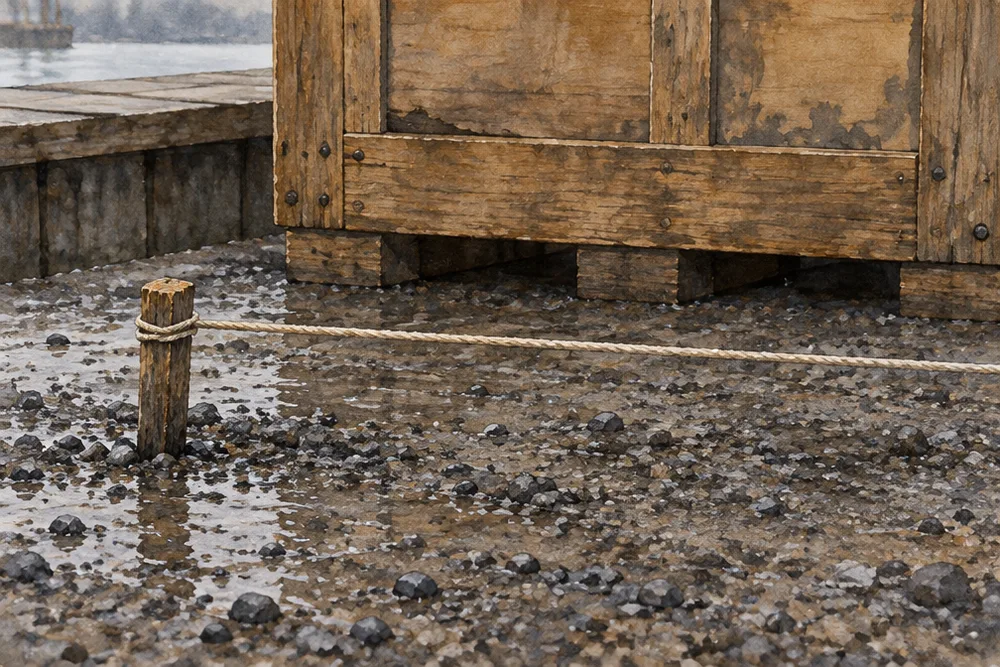
The carpenter had followed them out. He stood with a coil of measuring line over one shoulder, waiting for an instruction. Nessa asked him to mark the bay’s present limits and the width of the passage needed for a chair to turn without help. He stretched the line from the door frame to the store corner. Sabine measured the ground. Orin, still resting by the steps, called out when the line passed too near the turn he had failed to make.
They adjusted it by half a pace. The carpenter pegged the mark and laid the line again. This time the projected passage ran straight from the landing side of the bay to the store platform. It took part of the recess and forced the waiting area toward the outer wall. They would need a new place for freight to gather, and a route that stayed clear when crates arrived.