Seven Minutes Under the Glass Dam
Page 56 of 191
Chapters
Hessa looked up toward the dam. “The corridor’s gone dark.”
The last upper lights winked out. One by one, the bright rectangles behind the glass disappeared, until only the stray cream point remained, low and faint. The inspection walk that had looked like a lit hall now showed as a long black strip behind the panels.
Della scanned the wall for movement. The figure was gone. A hand signal might have been swallowed by the dark; a lamp might have failed. The convoy was still outside, the gate was stalled, and no one could hear the correction on the radio.
“We need to know whether it’s safe to pass,” Hessa said.
“We need the people inside to know we’re still here.”
Della stepped back to the cabin and took the small storm shield for the lamp. She fixed it around the lens, narrowing its beam so it would not wash out against the reflections. The storm was returning in thick sheets. The convoy lamps blurred behind her, each boat reduced to a moving patch of color.
She raised the shielded lamp toward the dark wall. A weak signal appeared far along the glass, not at the central window but at the edge of the inspection walk. It blinked twice, stopped, and blinked once more.
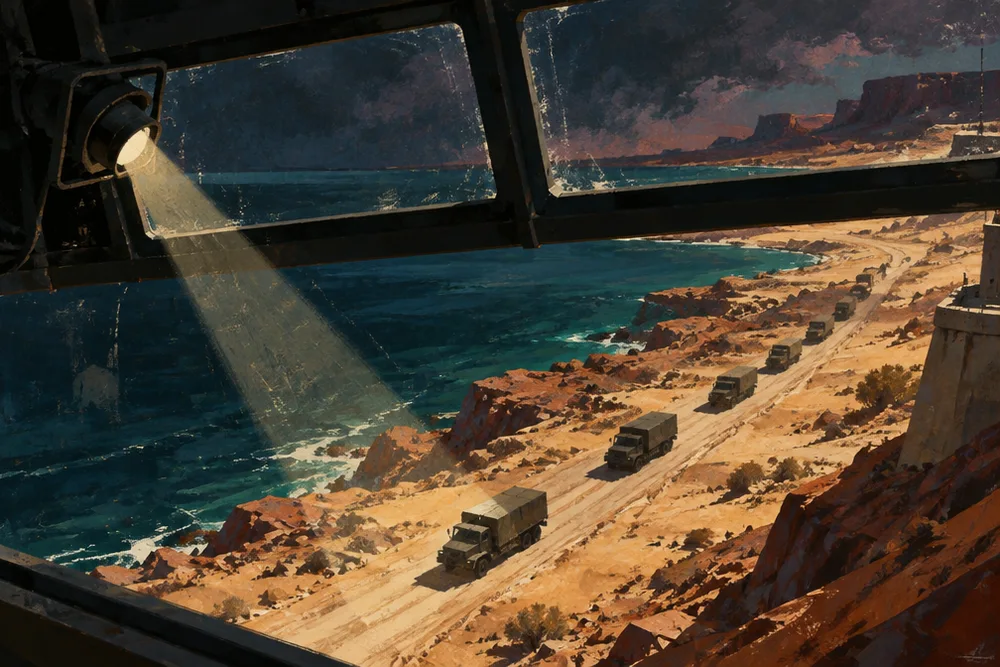
Della answered with two short flashes and one long. Hold. Wait. She hoped the workers had read the same call the boats had rehearsed. Then she turned to the convoy and repeated it, keeping her light steady until each captain answered.
The signal from inside vanished. Della stayed at the bow, counting breaths and waves. Plover lifted beneath her, then dropped. The dam’s immense surface reflected the lamp back at her in a pale smear. She shifted half a step to the side, found a sharper angle, and waited.
A moment later, the cream point returned. It appeared low on the glass, moved upward, then held. Della answered with the hold call. The point flashed once, paused, flashed again. She could not tell whether the pattern meant yes, no, or simply that the person had seen her.
“It’s something,” Hessa called from the cabin door.
“It’s something.”
The convoy’s engines idled in the funnel. Fuel burned while they waited, but the boats kept their positions. Della had given the captains the choice to refuse any maneuver; she would not turn that principle into a demand simply because the storm had made the alternatives ugly. A captain who judged a boat unable to hold could say so. Until then, the signal remained: stay bow-on, stay separated, do not enter.