Rent Receipts Under the Spin Cycle
Page 95 of 178
Chapters
They finished in the shared kitchen, where a radiator held the room at fifty-three degrees. An extension cord ran under the table to a little heater with a plastic grille. Mr. Salgado photographed the cord and asked who had brought it. Nobody answered. Bituin imagined every household had their own story of borrowing warmth, and that she had only just begun to learn the shape of them.
“I’ll file the report this afternoon,” he said at the front door. “It will be available to the board.”
Bituin thanked him. She watched him cross the dirty snow to his vehicle, clipboard tucked under his arm. In the laundromat, a dryer door clicked open and a strip of warm air reached her face. She went back inside and pulled the boiler estimate from her bag.
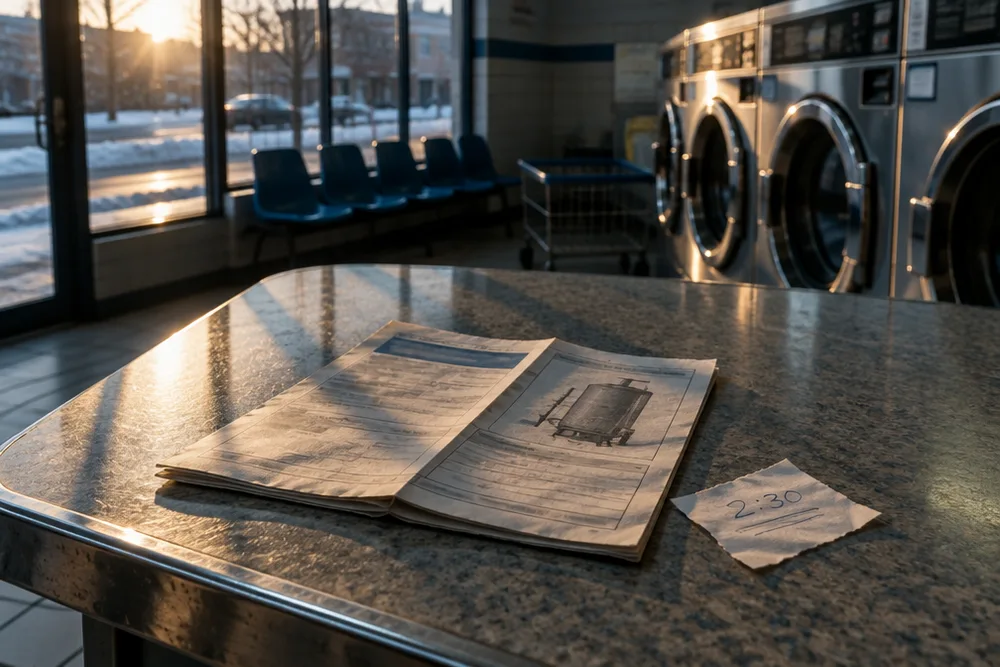
The estimate was creased along the middle, the fold soft from being opened and closed. Nena’s handwriting showed through the paper: boiler, upstairs; call back. Beneath it, the contractor had listed a replacement pump, a pressure valve, labor, and a note about inspecting the flue. The total made Bituin’s throat tighten. It was more than she had left after the market deposit, less than the price of losing every room upstairs to a winter without heat. The arithmetic did not care which description she preferred.
She laid the estimate on the folding counter, beside her phone, and called the contractor. A woman named Denise answered. Bituin explained that an inspector had visited and that the board needed an urgent assessment. She gave the building address, then waited while Denise found the old file.
“We can send someone tomorrow morning,” Denise said. “But I can’t promise the old estimate still holds. It’s been months.”
“I understand.”
“We’ll need access to the boiler room and the upstairs controls.”
“I can provide it.”
Denise quoted a diagnostic fee. Bituin wrote the number on the back of the estimate, though she already knew she would say yes. When the call ended, she opened her banking app. The balance looked smaller when she read it against the fee. She transferred the amount from the account she had been keeping for operating costs, then photographed the confirmation screen for her records.
The laundromat window cut the winter sun into long bright bars across the floor. Dust moved through them. At the rear counter, she opened the tin of receipts and sorted them by month, not because anyone had asked her to, but because the paper had become impossible to leave alone. Nena’s cramped entries, the dates and amounts, the room numbers: a ledger made from quick hands and the assumption that someone would remember what was missing.