Rent Receipts Under the Spin Cycle
Page 14 of 178
Chapters
He read it twice, then set his lunch bag down and took out his phone.
The paper said a representative of the purchaser could inspect the upstairs rooms the next morning between nine and eleven. It did not say which rooms. It did not say whether anyone would be asked to leave while the inspection happened. The last line directed questions to the seller’s representative, Ellis Kwan, at a number printed in small type.
Jomar photographed the page. First straight on, then close enough to capture the date. He sent the image to Bituin with a message: Is this yours? A moment later, the typing dots appeared and disappeared. No answer came.
He knocked on the nearest door. “It’s Jomar.”
A pause. Then the latch clicked. Mr. Santos opened it only as far as the chain allowed. He was still wearing his paint-spattered trousers from the maintenance shop, one hand braced on the jamb. Jomar explained the notice. Mr. Santos read the photograph on the phone without taking it from him.
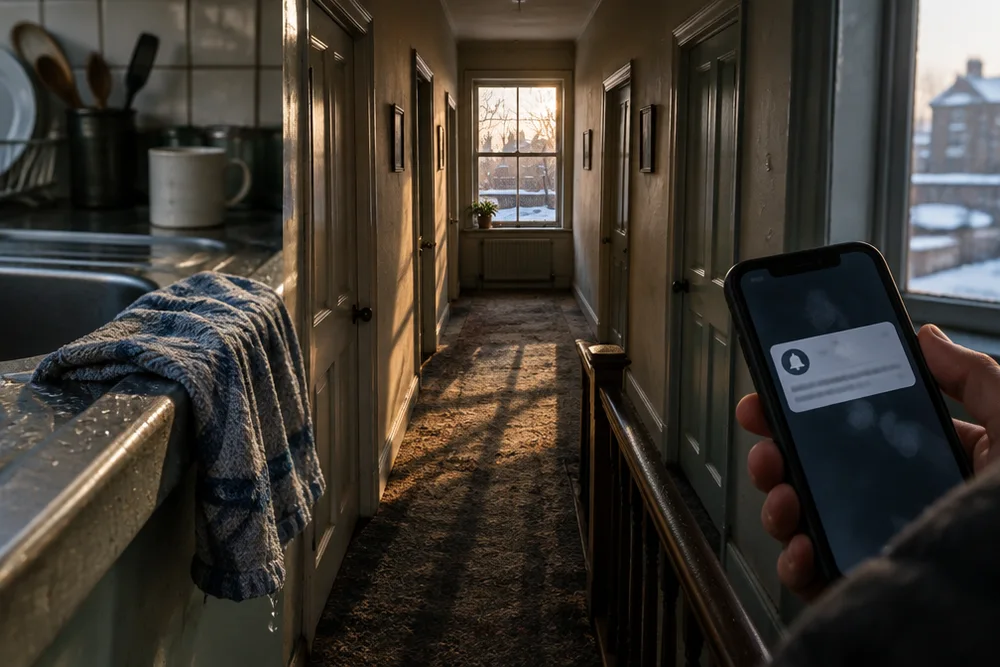
“Tomorrow?” he said. “I’m at work.”
“They say nine to eleven.”
“Then they can look at an empty room.” He shut the door, not angrily. Jomar heard the lock turn and understood the distinction: a person could be home and still refuse to be made available.
He went down the corridor. Four doors, each with its own small signs of occupation: a pair of rubber boots, a grocery flyer tucked into a frame, a drying towel draped over a hook, a plastic stool set out to catch the draft. There were no nameplates. In the shared kitchen, a pot of rice sat on the back burner with its lid tilted to let steam out. A damp dishcloth hung over the sink. Someone had left a half-used roll of paper towels beside the stove, the cardboard tube softened by humidity.
He returned to his room and sat on the bed to make a list. Room one, the Santos household: two adults, one child who stayed with an aunt on weekdays. Room two, Cora de Vera: alone, unless her niece was visiting. Room three, Jomar: alone. Room four, the couple whose names he knew only from the mail they retrieved together, one at dawn and one after dark. He wrote their first names, then stopped. A list could help keep track of people. It could also become a thing passed from hand to hand without their permission.