Put the Empty Chair on the Plan
Page 268 of 271
Chapters
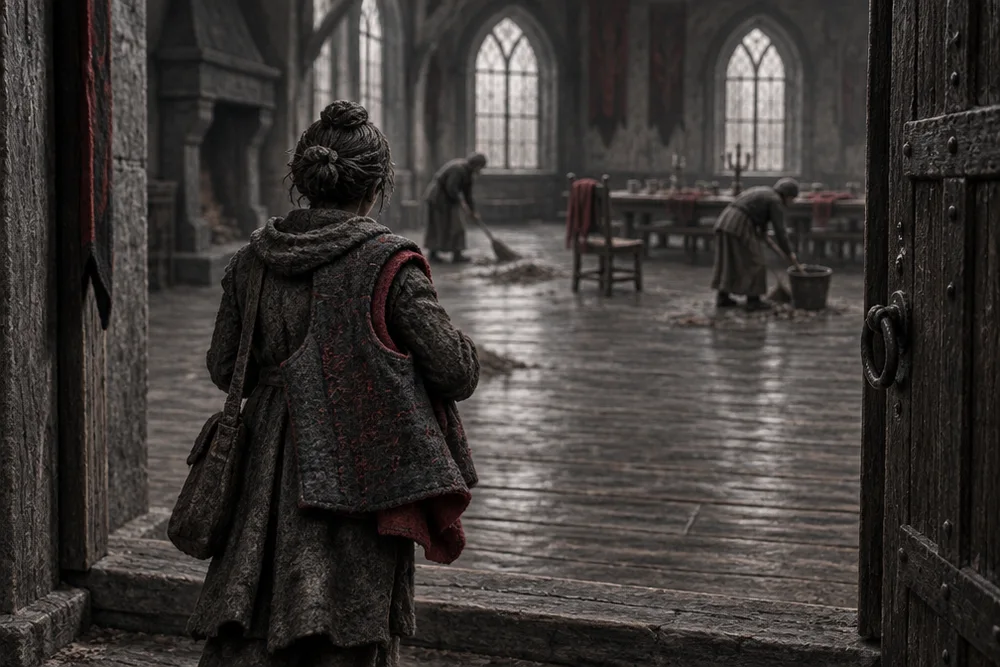
At the end of the meeting, a worker lifted the covered bench and carried it toward the workshop side. Another swept twine from the floor. The chair stayed where the plan placed it until the presiding officer checked the list again and marked the closing line. He did not ask Yarrow whether the room was ready to change back.
Yarrow had thought freedom would feel like an unlocked door. It felt more like this: a door that no longer required her hand to remain on its latch. The hall was not hers to abandon carelessly; the covenant remained, the lease had terms, and the town still needed the public room. But she was no longer the only person who knew which promise the chair carried. The obligation had become a public task, bounded by a plan and shared by people who could correct it.
Sella gathered the minutes. “They’ll want the notebook at the next roll review.”
“It’s there.”
“You’ve kept the names out of your own copy?”
“I never made one.”
“Good.” Sella’s voice had no accusation in it. “One authoritative roll is enough, if it’s kept where people can challenge it.”
“And the private words?”
“Not in the roll.”
Yarrow glanced at the chair. “Not in the minutes either.”
“Only what happened, and what the town decides.” Sella closed the ledger, the crimson tape snug around it. “That’s what the record is for.”
Yarrow picked up the vest. It smelled faintly of cedar from the box where it had been kept, with a trace of stove ash caught in the wool. She had imagined the smell might bring back Orla whole, a familiar voice with instructions attached. Instead it brought her the memory of Orla’s hands—thick-knuckled, quick with a needle, tugging a thread tight and then biting it clean.
“I’ll see you at the counter,” Sella said.
“Not for a while.”
Sella gave her a look that contained both a question and the good sense not to press it. “Then go.”
Yarrow went out into the evening air. The tidal town lay in levels around the hall: upper street, steps, low doors, mud landings. The bell tower rose over the roofs. It did not call her back. Its silence belonged to no one in particular; it was what happened when the room’s duty no longer rested on one person’s fear.
At the upper street, she turned inland.