Please Hold for the Ferry
Page 99 of 211
Chapters
Leon stayed where a passenger would have to start, on the road side. “I’d follow you,” he said to the supervisor. “I wouldn’t know that was wrong.”
The supervisor took his hand off the chain. Sima lowered the map, and Cora came up beside the post to look through the opening.
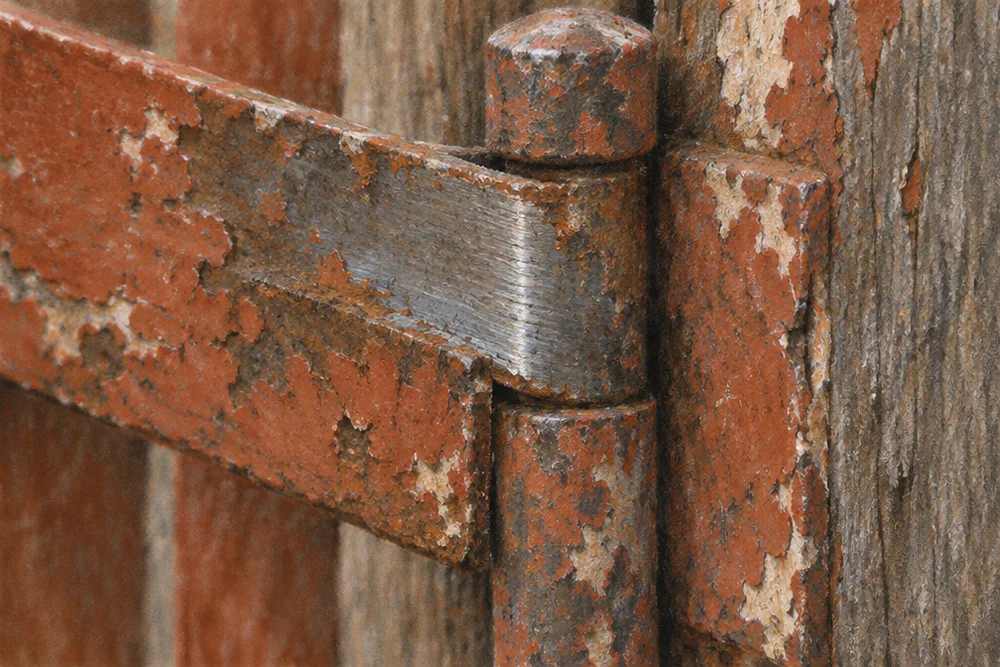
The gate sat between them and the quiet strip of pavement beyond it. Its inward swing made the opening smaller than the space around it suggested. Cora stepped to the hinge side and measured the gap with her eyes. A person could squeeze through. A person carrying shopping might turn sideways; a wheelchair would not pass without the gate being held and the ground kept clear.
“It’s not an access point as it is,” Sima said.
The supervisor nodded once. “It’s for staff on foot. They know to pull it back and wait. It was never built for a queue.”
“Could it open outward?” Cora asked.
“Not into the yard. It would block the truck lane.” He pointed toward the road. “And not onto the verge without checking the boundary. I won’t put a gate where a driver can clip it.”
Sima took a small measuring rule from her bag and crouched at the hinge. The sleeve of her slate suit pulled tight at the elbow; rust-colored trainers planted wide on the concrete. “If we cut a separate opening here, the existing gate can stay for staff. The public entrance would be set outside the vehicle line.”
“You mean another gate,” Cora said.
“An opening in the fence with a pedestrian gate that swings inward on its own clear area. It can be sized to the access standard. We’d need a level approach and a place for people to wait that isn’t in the truck route.”
The supervisor looked down at the scraped gate edge. “The fence line is ours. You don’t get to move it by drawing a rectangle.”
“No,” Sima said. “But I can measure what would be required, and you can tell us what the depot would permit.”
Cora stepped back far enough to see the fence, the apron and the waiting strip together. The idea of a separate gate made the stop look less like a compromise and more like a small construction job with a price and an owner. That was better than a promise, though it did not yet mean the bus could come.
“Who pays for the opening?” she asked.
Sima straightened. “The route amendment would need an access cost. I can price the gate and the work. The board would have to approve the funding.”