Please Hold for the Ferry
Page 183 of 211
Chapters
The chair called for the motion to fund two daily deviations, the gate work, and the recovery allowance for one month, with manual counts and a separate access review. The clerk read each condition aloud. Cora followed them on the page. When the vote came, she did not look around to guess the result before the hands were raised.
The motion passed. The chair repeated the limits so no one could mistake a trial for a permanent route: two daily deviations, one month, operator logs, depot duplicates, a review of access barriers beyond the yard. The clerk entered the funding authorization and asked Sima to confirm the service date.
Sima checked the operator’s roster. “The first Monday after the gate work is signed off,” she said. “The depot has to certify the opening before the drivers can use it.”
The hospital worker with the turned badge asked what would happen if the gate work passed but the uphill approach remained difficult. The chair said that issue belonged to the separate review and that its findings would return to the board. She did not promise a date beyond the review schedule.
It was a narrow answer, and the woman did not thank her. She asked for the review contact in writing. The clerk gave her the form and pointed out the public counter where a response could be logged. Cora watched the woman read it before putting it in her bag.
Sima closed the map sleeve. “I’ll send the depot supervisor the approved conditions today,” she said to Cora. “The operator needs the final roster changes by Thursday.”
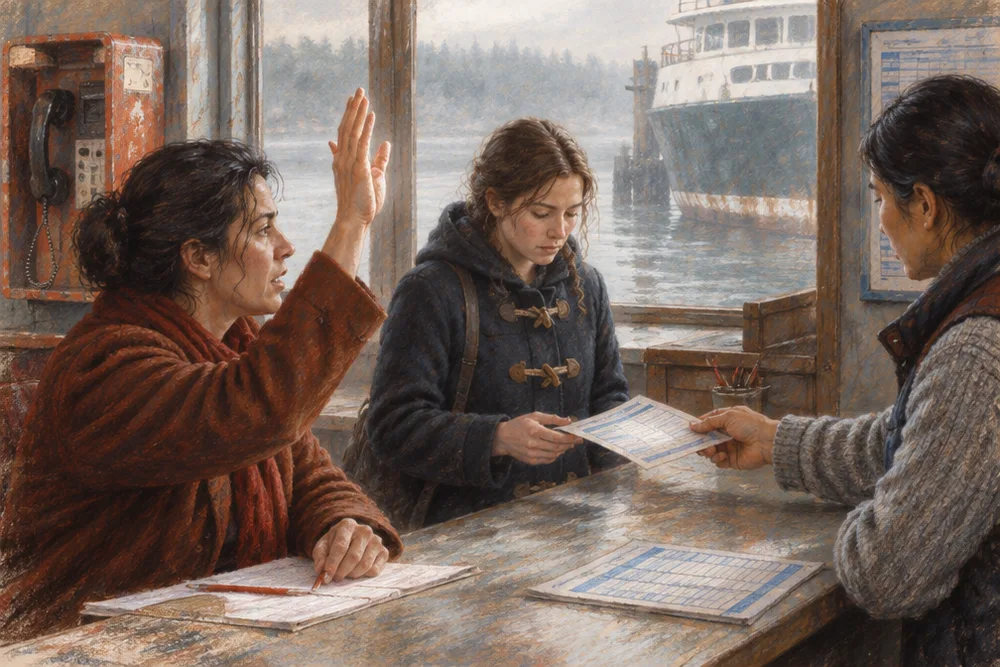
“Then send them direct,” Cora said. “I’m not dispatching the shuttle.” The sentence felt awkward, as if she had set down a tool she used to carry by habit. She added, “I can check the old timetable against the posted times if the clerk needs the chronology.”
“That’s useful,” Sima said. She did not ask Cora to promise more.
After the meeting, Cora stayed while the board members gathered their papers. The supervisor from Salt Yard had brought a site sketch folded into quarters. He uncreased it on the counter and showed where the crew would move the pedestrian gate, clear the hinge, and put down a painted waiting line. His pencil marked the swing with a blunt curve.
“The line has to stay outside this,” he said, tapping the arc. “If people queue over it, the gate can’t open cleanly.”
“And if someone comes with a frame?” Cora asked.
“The path inside the opening will be level. The apron beyond it isn’t a pavement all the way to the shuttle bay. We’re putting down a firm strip. The driver will stop at the marked point, not wherever a queue forms.”