Please Confirm Our Divorce
Page 5 of 166
Chapters
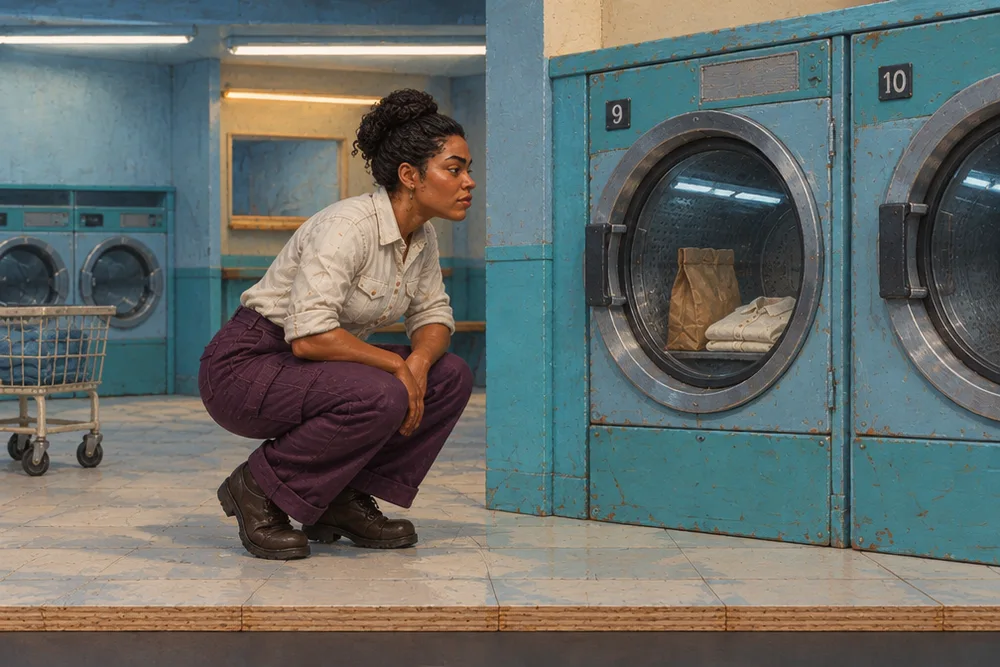
There, folded inside a paper bag, was her spare blouse. A tiny rust mark had appeared at one cuff, a brown pinprick that might have come from the machine or might have been there already. Petra had tucked the bag behind the drum, where it could not be seen from the front. She had checked it last week. She had not moved it since.
She stood and turned around. Niall had stayed at the counter, where she had left him. His hands were clasped behind his back now. The envelope waited between him and her notary stamp.
“You could have seen me put it in there,” she said.
“I could have.”
“Did you?”
“Not tonight.”
“That isn’t an answer.”
“No.” He looked tired again. “I don’t know how to give you an answer that won’t sound impossible.”
Petra returned to the counter. The papers seemed different now, though they were only paper: thin, official, and too neatly aligned. “You know the date on these is impossible. You know the marriage hasn’t happened. You know about a blouse I haven’t told anyone about. And you expect me to trust you?”
“No.”
That answer surprised her. “Then what do you expect?”
“I expected you to be angry.”
“That’s not the same thing.”
“No.”
He had a way of agreeing that left the work of the conversation with her. Petra disliked it. She also noticed his hands were trembling slightly, though his voice remained level. A person could fake composure; a body was less obliging.
“You should tell me your explanation,” she said. “Before I decide whether to call the police.”
“You can call them.”
“That’s not the sort of thing that reassures me.”
“I know.”
Petra glanced at the clock. 8:16. The interview train would arrive in four minutes. She could still make it if she left now. The papers could wait. The station seal could wait, though the works crew expected her to finish the notice tonight. Niall Rooke could wait in the hands of a constable, if she chose that path.
Her canvas bag sat beneath the counter. The corners of her repair samples pressed against its side. She had spent months preparing for the interview, but the opportunity had come with no guarantees. A paid traineeship, if she got it, would mean leaving Dunwick before dawn some days and being away from the shop more than she was ready to admit. The pay would be modest. The work would be difficult. She wanted it anyway. Her wanting had survived every sensible calculation she had made.