Please Confirm Our Divorce
Page 163 of 166
Chapters
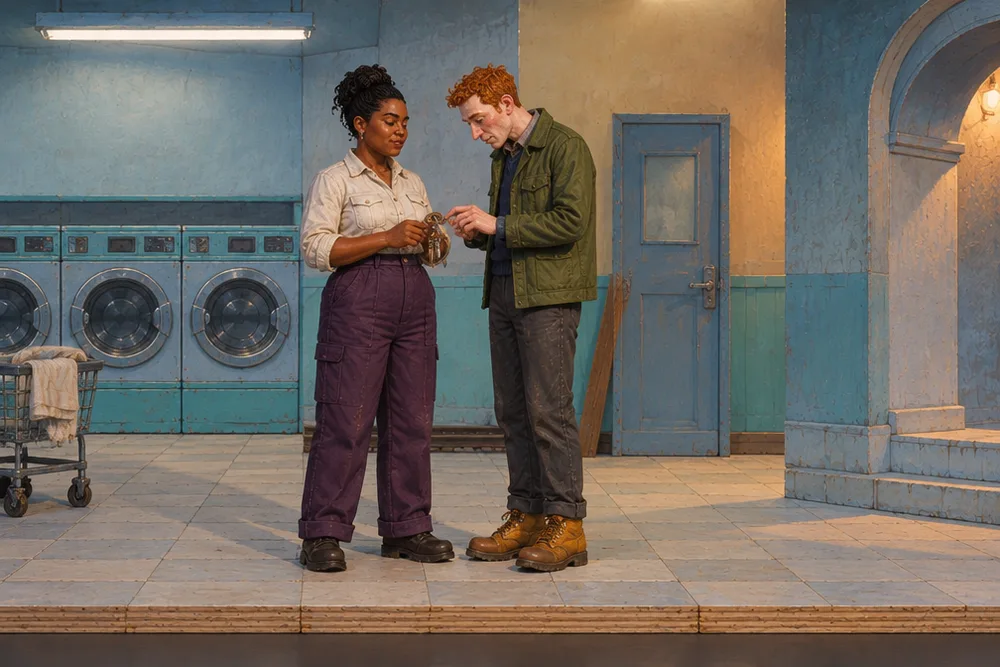
Afterward, Petra walked to the back of the shop. Dryer nine was gone. A white replacement stood in its place, broader and quieter, its door reflecting the fluorescent strips. The sealed platform arch remained behind it, now a section of solid wall with a neat painted outline where the old opening had been. The wall had no special light, no seam, no movement. The plaster had settled; a faint hairline crack ran beside the outline.
Petra touched the repaired surface with the back of her fingers. Six years ago, she had stood in this room and watched a future version of Niall go back through it. Tonight was the date on which, in his branch, the arch had first opened again. She had wondered for years whether the old place would answer the coincidence with anything. It did not.
She found no gap, no silver glimmer, no proof that another Petra had been asked to sign away a future. The wall stayed wall. The dryers stayed silent until the next customer chose a cycle.
At seven, the street door opened. Niall stepped in, ducking instinctively beneath the sign, navy work coat unbuttoned over a clean shirt. At forty-one, he had gray at his temples and creases beside his eyes. The crooked nose and listening stoop were unchanged. Petra’s wedding ring caught a thin line of shop light as she lifted a hand.
“You’re late,” she said.
“I know. The last inspection ran long.” He crossed to her and kissed her cheek, then looked past her at the wall. “You checked.”
“Of course I checked.”
“Anything?”
“Nothing.”
“Good.” His gaze returned to her. “And the exhibition?”
“Opened this afternoon. The first one I’ve led from the condition survey through installation. There were too many people in the room at once, and one person asked whether the repaired textile was new.”
“What did you tell them?”
“That I’d be delighted if they could tell me which part they thought was new.”
“You didn’t.”
“I did.”
He laughed, and she felt the day’s tightness loosen a fraction. She told him about the visitors, the school group, and the small mistake she had caught in the labels before anyone else saw it. He listened without trying to solve the minor problems or improve the parts that had gone well. Then she told him about the placement.
The offer had arrived two weeks earlier: three months at a regional collection, assisting with a set of large hanging textiles that required more hands than the local team had. The work was exactly the kind she wanted to learn. It was away from both Bellcross and Dunwick, far enough to make their usual visits impractical, close enough to reach by train if they planned ahead.