One Chipped Molar, One Mended Cardigan
Page 53 of 273
Chapters
Iven turned and left. The door swung shut behind him, rattling once in its frame. No one spoke until his steps faded along the corridor.
Pella drew her hand back from the ledger. “You have until he returns.”
“I have these copies.” Marta touched the papers hidden inside her coveralls. “I’ll make another set before I leave.”
Pella reopened the ledger and found the page where the household schedule and worker account met. Marta copied the cross-reference exactly, including a scratched-out word that might have been “deferred” and a clerk’s initials written over it. She added the date of the shirt’s issue and her own name beside the repair mark, then stopped.
“Don’t write interpretation into the record,” Pella said.
“I’m not. I’m marking what I can verify.” Marta drew a line beneath her name. “The tooth is gone. The shirt came out at 2:13. The stitch matches the bundle.”
“Good.” Pella turned the ledger back toward herself. “Keep each fact separate. Let them see the connection without giving them an excuse to call it a story.”
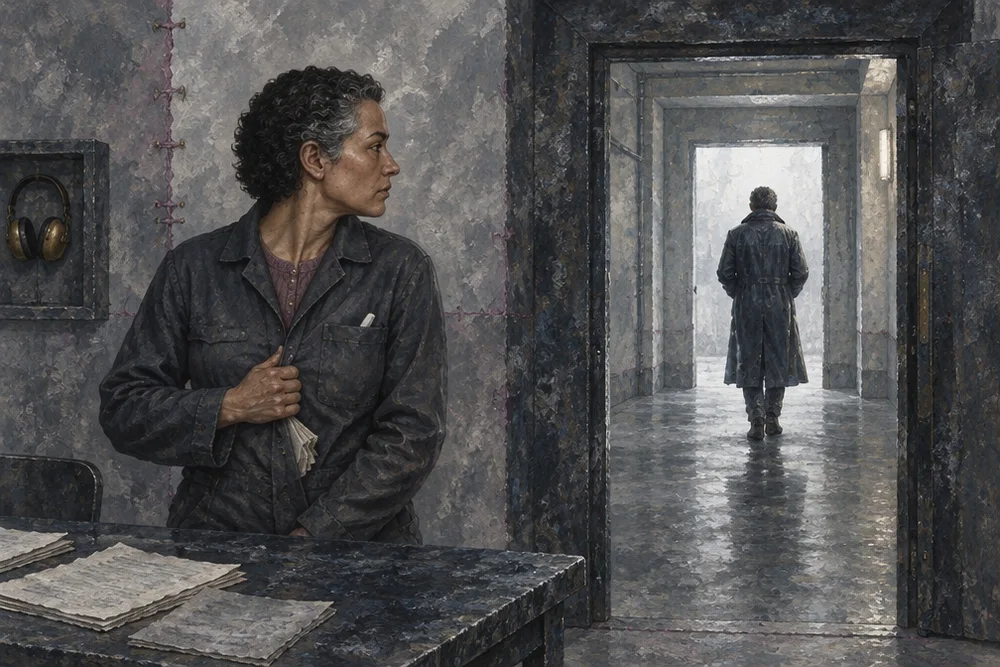
Marta folded the copies once and placed them inside the slate coveralls, behind the chalk. Her fingers brushed the pocket lining, and she thought again of her mother’s cardigan. She had not yet decided what the machine could be made to accept, but the dormant schedule had become something more than a strange old page. It was a door the city had left shut while charging the workers on the other side.
“You’ll keep the original here?” Marta asked.
“For now. I’ll lock it in the Button Room cabinet. If Iven comes back with a proper receipt, I’ll make him write down the broken clasp.”
Marta looked toward the door. The laundry ran on above them, its pipes carrying the thud of cycles through the former bathhouse. Somewhere in Number Four, a dry shirt might already be waiting in the dark, its pocket turned out by the pressure of whatever the machine had counted.
She had come to Pella with a tooth she could no longer feel and a shirt marked by her mother’s hand. She left with copied pages that made the loss legible: the worker account did not care whether its names were present, only whether they remained active. On the reverse lay another schedule, dormant but intact, with a different kind of payment written into its columns.
Marta tucked her chin against the cold corridor air. The question following her out was not whether the machine had taken something. It was whether the city could make it take from someone else.