One Chipped Molar, One Mended Cardigan
Page 50 of 273
Chapters
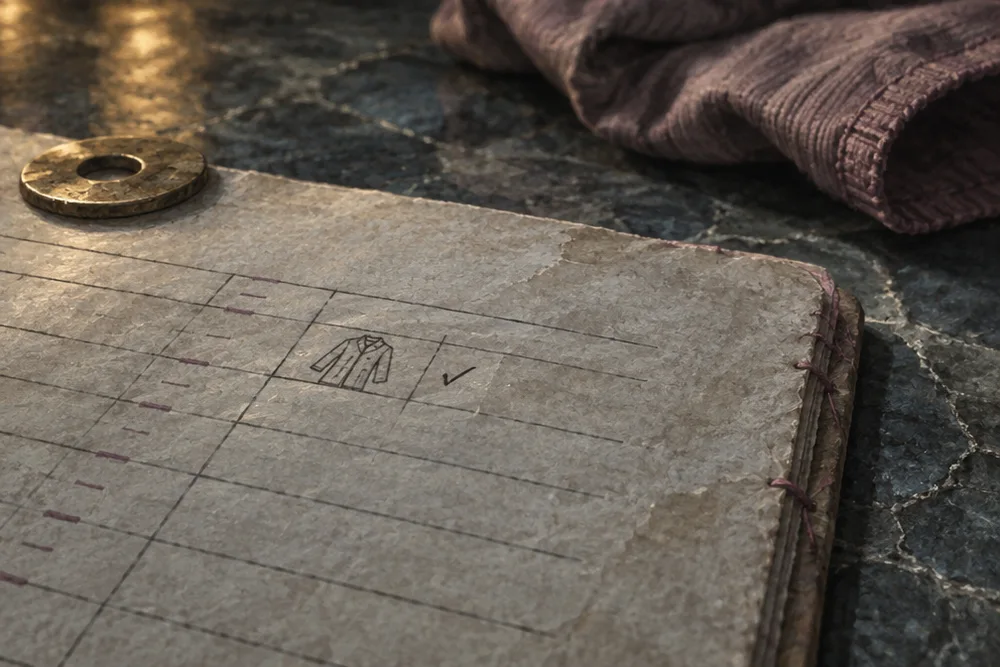
“We copy it,” Marta said.
“Both sides,” Pella answered. “The household side, the worker side, the notes. A partial copy is a story somebody else gets to finish.”
Marta pulled the blank dispatch sheets from her pocket and spread them on the table. The chalk in the breast pocket marked her fingers as she uncapped the pencil. Pella opened the book again, finding the first page with the crooked repair mark. They began with the entries that tied the shirt to the bundle, then the night charges, then the approved leave marks.
The work was slow. The old ink broke into loops and slashes; Marta had to pause at each line to ask Pella whether a mark was a date, an initial, or a notation for returned stock. She copied the words as they stood instead of smoothing them into a clean account.
By the time they reached the worker entries, Marta’s hand cramped. She flexed her fingers and glanced at the door. Nothing moved outside it. The Button Room had once been a towel cage, and the old metal bars remained in the walls, shadowed behind shelves of spare fasteners and tools. From the laundry floor came the deep, ordinary shudder of a machine cycling through its work.
“If this schedule can change the payer, why wasn’t it used?” Marta asked.
“Because the worker account was easier.” Pella turned a page. “No one had to get a household’s agreement, find a repaired garment, or explain the cost. You put the names on the roster and let the machine charge them. The city got its linen.”
“And the household schedule made the person choose what it cost.”
“That’s what it looks like.” Pella did not raise her head. “But a choice can still be a trap when the city makes every other route impossible.”
Marta set her pencil down. The first household line in the dormant schedule held a name she did not know. Beneath it, someone had written a note about a garment rejected because the owner had not chosen to surrender it. The garment had been returned intact. An acceptance mark appeared only after another entry, several lines lower.
“The machine accepts a garment freely given,” Marta said. “It can tell?”
“Or whoever recorded it insisted on writing that it did.” Pella tapped the note. “Don’t confuse the machine’s rules with the city’s honesty.”