One Chipped Molar, One Mended Cardigan
Page 38 of 273
Chapters
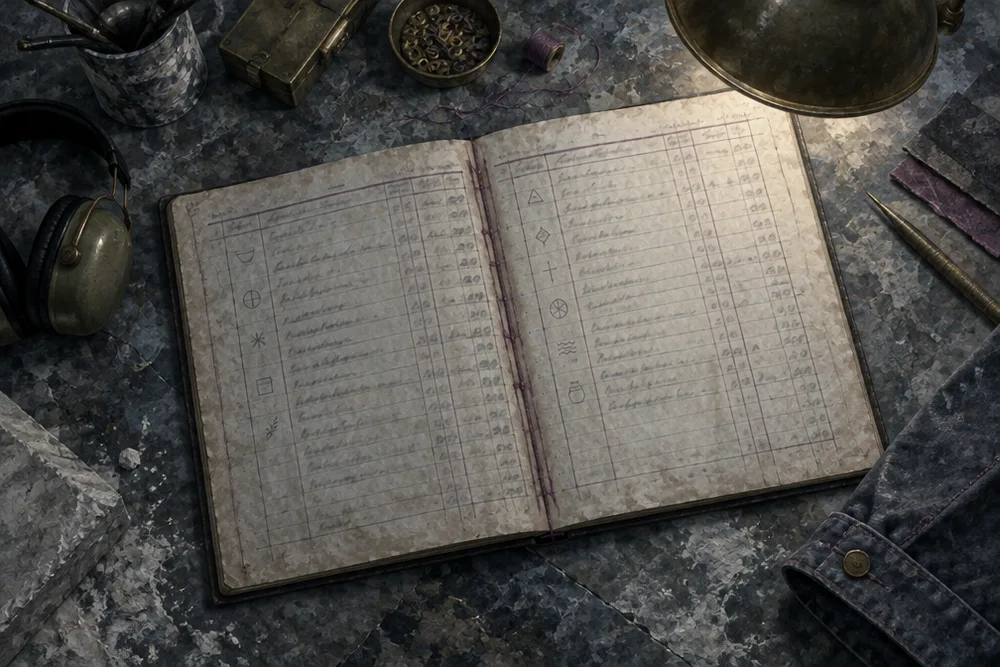
Pella set the ledger on the workbench and opened it to a page of ruled columns. The left side listed households, bundle numbers, and mending notes. The right side held dates and amounts. Some entries were faded; others had been crossed out in thick blue pencil. The bottom clasp hung loose against the cover.
“This is older than the current contract,” Pella said. “Before the city centralized the household route, repairs traveled with the bundles. People marked their clothes in ways they’d recognize. Initials, a stitch, a patch.”
Marta leaned over the page. One entry showed a crooked cuff, noted beside a household number. She could not read the old shorthand. “Does that mean the shirt came from my mother’s bundle?”
“It might. I need the other side.” Pella lifted the book by its spine and turned it carefully. “The records were copied through the cover. You read a household mark on one side, then the machine charge beside it on the reverse.”
“A machine charge?”
“I said the book was for repairs. I didn’t say repairs were the only work it recorded.” Pella’s white braid rested beneath her cap; her hands moved with the confident caution of someone who had spent years keeping paper from falling apart. “There were things I wasn’t allowed to enter on the official sheets. The old line kept track of who had to pay for what.”
“Pay in teeth?” Marta asked.
Pella did not answer at once. She turned another page. The paper rasped under her fingers. “I kept the ledger because I didn’t know what the figures meant. Then I understood enough to be afraid of losing it.”
“How long have you known?”
“Long enough to know that a book can be useful and still not save anyone.” She tapped a line of narrow handwriting. “This mark is like the cuff. See?”
Marta bent closer. The crooked stitch had been reduced to a short description and a household number. She recognized the angle of it, but the number meant nothing to her.
“What household?” Marta asked.
“I can’t say from this page alone.” Pella slid a paper under the weak binding to support it. “The ledger was built to connect the bundle to the owner. That was the whole point. If a coat went missing, the mark told us where it belonged. If the city charged for a repair, the other side showed who’d done it.”
“And now it connects the shirt to my mother.”
“It connects the stitching to a household mark that could be hers. Don’t jump ahead.”