One Chipped Molar, One Mended Cardigan
Page 194 of 273
Chapters
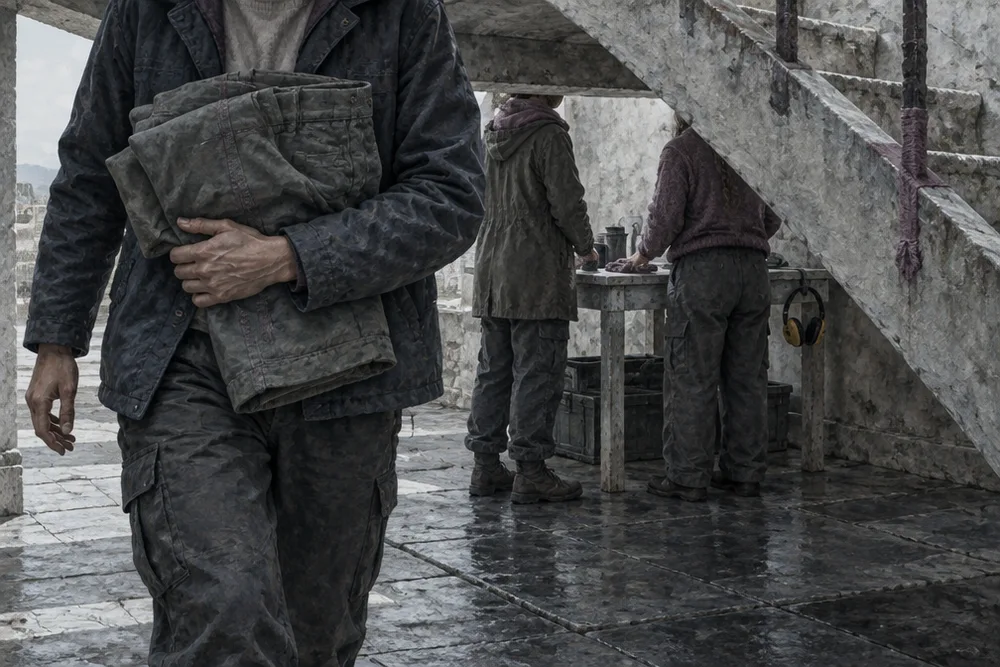
The clerk read the page, then went to the folding table’s lockbox. He returned with a small envelope and counted the deposit into Oren’s palm. Oren stared at the coins, then at the loan pair. “That gets me through the gate,” he said. “It doesn’t give back my trousers.” “No,” Marta said. She couldn’t say it would. The clerk crossed out the deposit notation and added that the garment had been accepted against the household balance. Oren signed the correction, not the original offer. He kept the loan pair because he had to work in the morning. The trousers he had mended were carried to the city van.
When the van door shut, Oren stood for a moment with his new trousers folded over his arm. “Friday,” he said. “They told me the loan only runs until Friday.” “And if you can’t pay by then?” “I give them back. Or they add it to the account.” He shook his head once. “I gave them something I could use every day. Now I’ve got something I don’t own.” Marta offered to walk with him to the depot, but he shook his head again. He wanted the morning to be his own, at least until the gate.
Marta watched him leave Stair Court. The returned deposit had mattered: without it, his work shift might have cost him another sum he couldn’t spare. But the city had kept the trousers and counted the exchange as voluntary. The paperwork made the loss look like assistance and the loan look like a gift. She took the city notice from the wall and turned it over. On the blank back she wrote the number of households whose clothing she had seen go onto the table.
Tamsin Wrenstave found Marta in the entry hall, reading the inventory sheet a second time. She had come down in her green-gray coat, its mauve elbow patch nearly the same color as the repair thread on the old notice’s pasted corners. She looked at the city pile without touching it. “They’ve taken work things,” she said. “One pair of trousers. There may be more.” Marta told her about Oren’s deposit, and what had happened to the trousers.
“A replacement that has to be handed back isn’t a replacement,” Tamsin said. “It’s a borrowed thing with a bill attached.” “They say the clothes are donated.” “People give away what they can spare. That’s different from a landlord emptying a cupboard and calling the clothes free.” She braced one palm on her hip and examined the tagged garments. “Could we make a rack here? Not a city rack. A lending rack. Nobody gives up what they have to borrow something else.”