One Chipped Molar, One Mended Cardigan
Page 148 of 273
Chapters
Pella closed the contract and took off her glasses. “You’re reading the clause as protection. It protects one boundary. It doesn’t feed a household or keep a bed open.”
“I know.” Marta rubbed her thumb over the paper’s edge. “I’m not asking anyone to be grateful.”
“You will be tempted.”
“I know that too.”
Pella watched her for a moment, heavy eyelids nearly shut. “A signatory can close the old account. A signatory can also make a promise on behalf of people who never saw the form.”
“I haven’t signed.”
“Not yet.” Pella replaced her glasses. “You’re carrying the garment that could start the schedule. Once you do, it won’t be a private gift. It will open the household account for everyone listed.”
Marta turned the folded cardigan over in her hands. The pearl buttons made three small bumps beneath the towel. “I’ll list the city and myself first. Not Stair Court. Not the ward. The city can be the first line on its own schedule.”
“The contract may let you do that.”
“May?”
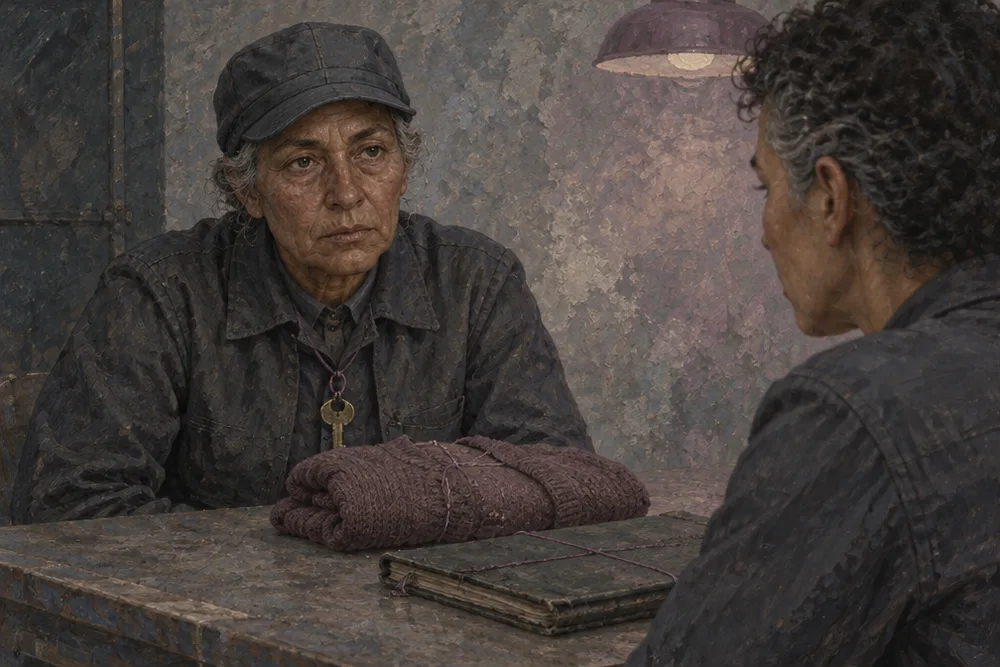
“The copy I have does.” Pella slid the ledger toward her. “Read every line before you sign. And don’t mistake being the first payer for having the right to choose everyone else’s coat.”
Marta opened the schedule again. The first line named the municipal household account; below it was a blank for the responsible signatory. She wrote her own name in the margin, not the box. Not yet. The act of writing even that much felt like putting her hand on a door before knowing what waited beyond it.
“Can I cover only my household?” she asked.
“The ledger says the first garment opens the schedule,” Pella replied. “It doesn’t say the garment pays every neighbor’s annual debt. The cardigan covers your household. The rest are listed separately.”
“Then the city’s still asking each door for a garment.”
“Or the city will have to learn what refusal costs.” Pella’s voice stayed level. “The service will stop at audit for those who don’t pay. That’s not theoretical.”
Marta pictured Tamsin’s patched coat and the six separate kitchens behind one street number. The city’s forms would fold them into one line; the machine would not care how many bodies were cold inside it. If Marta signed, she would not have consent from them. If she did not, the old worker account remained open.
“I’m not going to tell them it’s safe,” she said.
“Then you’ll be doing better than the people who wrote the contract.” Pella gathered the loose pages into a stack. “Take the refusal back to the Annex. Keep a copy. Make them stamp it received.”